
When I started in digital marketing, I saw optimization as a checklist of tasks. I soon realized that mastering on-page SEO is key. It helps search engines crawl, understand, and rank your pages. Many marketers focus on off-page signals and brand mentions. But real relevance and quality start with your website’s architecture and on-site elements. Create content with precision and align your URL structures with your audience’s needs. This earns you more clicks and visitors. It also strengthens your brand’s trustworthiness in a busy digital space. This guide combines years of agency expertise. It shares On-Page SEO Secrets that help top-ranking sites stand out from stagnant ones.
The Three Pillars of On-Site Excellence
To master on-page SEO, focus on three key areas:
- Content
- HTML
- Website Architecture
Each pillar serves a distinct purpose in navigating modern search algorithms. Today, SEO writing isn’t about tricking browsers or gaming the system. It’s about showing Expertise, Authoritativeness, and Trustworthiness (E-E-A-T).
Google’s Search Quality Rater Guidelines state that search engines prefer creators with real-world experience. This is especially true for YMYL (Your Money or Your Life) topics, like health, finance, and safety. Author expertise, along with firsthand experience, outshines any AI-generated text. Use advanced natural language processing to target related phrases, topics, and entities. Focus on meaning, not repeated text.
Content Development and Industry Authority
The old adage “Content is King” remains true, but only if that content serves the end user with precision. To build real authority in your industry, create strong content blocks. Write detailed product descriptions and clear technical specs. This will help turn cold traffic into active leads and sales. A great on-page SEO secret is to use a Blog Topic Generator. You can also check Google-suggested searches. This helps you find high-volume SEO trends and common pain points.
Each page you make, like DIY tips, FAQs, or eCommerce service pages, should support your main landing page. Keeping content fresh is key for ranking. Update it to fix errors. Also, offer content exports or opt-in deals to stay relevant. You should enhance your value with visual assets. Use videos, charts, and original product images. This will please computer vision models and help future-proof your visual search strategy.
Strategic URL Structure and Planning
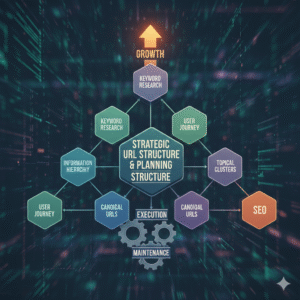
The path to ranking success begins with a well-optimized URL. In my consulting work, I’ve found that a good website URL is simple: domain.com/category/keyword-phrase. A good URL offers more than compatibility with search engines. It shouldn’t have extra folders or messy query strings. It’s about planning for the potential of every page. Avoid non-descriptive paths that fail to include the main keyword phrase.
If you want to rank for a specific term like “grow lights,” that specific key phrase must exist in the URL string. To get your keywords on Page #1 of Google, you need to follow a careful SEO process. Keep a detailed record of everything, whether you use a shopping cart platform or custom code. You might want to use Excel during your keyword research. This stops “keyword cannibalization.” It helps search engines see a clear map of your website’s areas.
The Internal Linking Circulatory System
Effective internal linking is the circulatory system of a successful website. Google looks at more than links in paragraphs or blog posts. It also checks your header navigation, drop-downs, and footer links. Use links to featured products, categories, and related items on your homepage. This will help index and connect every product image and subpage.
One of the vital on-page SEO secrets involves using optimized anchor text. Linking to a valuable page, like an eCommerce SEO page, is a smart internal linking strategy. Use the target key phrase in the anchor text for better results. Many larger sites overlook this, which is unfortunate. This helps bots crawl and index your site. It also guides users on a clear path. This increases time on site and lowers bounce rates.
HTML Tags and Metadata Mastery
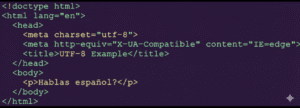
HTML, or HyperText Markup Language, is the standard for structuring web pages. To boost SERP rankings and relevancy, you must pay close attention to the code. From an SEO perspective, the title tag remains the most impactful element for ranking. Your title must be creative and unique. Keep it under 60 characters to prevent truncation.
Meta descriptions should summarize the search intent within a limit of 150 characters. While not a direct ranking factor, they are crucial for CTRs (Click-Through Rates). To optimize images, pay attention to key details. Optimize alt tags for SEO. Describe the image in detail. Think about explaining it to someone who can’t see. Also, make sure file names are descriptive instead of random, like IMG_001.jpg. These small but important on-page SEO tips show relevance to certain search queries. They also boost accessibility.
Header Tag Optimization for Scannability
An article’s success depends a lot on how well you optimize header tags. H1 tags should show the main article, category, or product name. H2 and H3 tags act as secondary and tertiary headers. Your H1 for an online store must include a key phrase. Avoid using it for logos or phrases like “Newsletter Sign Up.” This hierarchy helps Google focus on your page’s information. It helps Google understand how different subtopics relate to each other.
Technical SEO: The Foundation of Speed
Technical optimization is the foundation of any successful on-page SEO secrets campaign. Place heavy elements, like JavaScript, at the bottom of the page. This helps improve loading times. Check your canonical tags. They show Google which page version is the original. This is key for database-driven and eCommerce sites with duplicate content.
Mobile search volume has surpassed desktop. A responsive design with an adaptive layout for mobile screens is essential.
You can speed up your site by:
- Compressing images
- Reducing redirects
- Using browser caches
This helps you meet Google’s Core Web Vitals. These technical elements prove to be ranking factors that influence user experience.
Geotagging and local search visibility
If your business operates on a local level, geotagging and local SEO are your best friends. Manage listings and citations. This includes your Name, Address, and Phone number (NAP). Creating local pages or content hubs can boost mobile search. Focus on highlighting nearby products and “near me” services. Use localized schema markup for your business listings and events. This helps you show up in the “Map Pack” and other local search results. Update your Google Business Profile with photos and Q&As. It’s an easy way to boost your local presence.
Leveraging Schema.org and Rich Data
One of the most advanced on-page SEO secrets is coding your site with Schema.org and rich data. Structured data for reviews, pricing, stock levels, and breadcrumbs helps search engines display this information in search results. “Rich Snippets” grab searchers’ attention and boost your CTR. They change a regular blue link into a detailed result. This new format shows star ratings and prices. As a result, you gain an advantage before users even click.
The Ongoing Process of Optimization
In short, mastering on-page SEO is a continuous journey, not a one-time fix. A user-focused approach is key. It balances what search engine bots need with what human visitors want. To rank well, focus on high-quality, relevant content. Optimize every HTML tag. Also, ensure your site is fast and mobile responsive. These tactics will help you succeed.
Success comes from a solid strategy. Every part, from the image filename to the schema code, must work together.
If a blog post leaves you feeling lost, go back to the basics:
- Offer value.
- Organize it in a clear manner.
- Make it easy for Google to read.
Here’s how to shift from “doing work” to “doing the right work.” This helps you secure a top spot in search results.