
Learning how to do backlink analysis is one of the most important things you can do to help your website grow. In the world of SEO, backlinks act like the backbone of your entire site. Think of a backlink as a virtual pat on the back or a vote of confidence from one site to another. When a high-quality site links to you, it tells Google that your content is valuable and relevant. But not all links are good. Some can be harmful, and others might even get you penalized. Every site owner must learn to conduct a thorough backlink profile analysis. It’s a tricky but essential task.
To boost your search rankings and land on the first page, you need a solid backlinking strategy. In this guide, we’ll share how to do backlink analysis. We’ll use easy language and top tools like Ahrefs, SEMrush, and Moz. If you’re a SaaS company, a startup like Flick, or a small business, this expert analysis can help. It will improve your search visibility and make you more popular online.
When Do You Need A Backlink Profile Analysis?
In my personal experience, many people think that checking links is a one-time job. This is a mistake. To maintain a strong backlink profile, you need regular analysis and constant evaluation. The internet is always changing. Even as SERP features evolve, PageRank remains a highly relevant ranking factor. Search engines decide if your website should rank high for specific queries. They do this by analyzing linking patterns.
You should conduct a review of your progress over a fixed duration. Some SEO professionals suggest doing this weekly, monthly, or every 3 months. Reddit communities talk about things like site size and how often content is shared. Still, some situations make an audit necessary. If your website traffic suddenly drops or you get a manual Google penalty, act quickly. Make smart decisions right away. To do backlink analysis now, you must find potential issues. You should also refine your acquisition strategies to save your rank.
What is a Backlink Analysis?
A backlink analysis looks at how many and how good the websites are that link to yours. It is like looking at your social proof. If a lot of reputable sites link to you, your site authority goes up. This process is a huge part of search engine optimization (SEO). This analysis helps you check your search engine performance. You can also find ways to boost your online presence.
Your backlink profile has links from social media. It also includes links from online directories and other websites. Research shows that 67.5% of SEO experts think backlinks matter. They believe backlinks greatly affect search engine rankings. In fact, the first ranking page on Google usually has 3.8x more backlinks than pages further down the list. To reach the top positions, use the data from your backlink profile analysis.
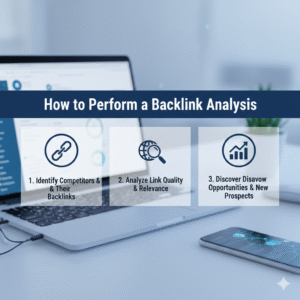
How to Perform a Backlink Analysis
The first step in how to do backlink analysis is to identify your target website. Usually, this is your own site, but it is also a great idea to analyze a competitor. If you know what your competition is doing, you can replicate their success.
- Select a backlink analysis tool: You can’t do this manually. You need an online tool to investigate the database of trillions of links. Popular choices include Ahrefs, SEMrush, and Ubersuggest.
- Enter the domain: Once you enter the URL into the dashboard, you will see an incoming wave of data.
- Check the total number of backlinks: This is an essential metric. If your total number of links is low, it explains why you aren’t ranking well.
- Identify referring domains: A referring domain is the website that links to you. It is better to have links from many unique domains than to have many links from one site.
- Analyze anchor texts: The anchor text is the clickable word in a link. Anchor text optimization is valuable because it tells Google what your page is about.
Using Top Tools for Your Analysis
Each backlink analysis tool has its own unique feature.
- Google Search Console (GSC): This is a reliable tool because it shows you exactly what Google sees. You can use the Links report to see top linking sites and top linked pages. It offers a personal look at your health. But it doesn’t include competitor backlink audit features.
- Ahrefs: It’s famous for its Site Explorer tool. It helps you track broken backlinks, new ones, and lost links. You can use red tags to spot links that need reconsideration.
- SEMrush: This tool is great for competitor insight. You can use the Backlink Analytics tool to compare your site against others. It even has a Backlink Gap analysis tool to find opportunities you might be missing.
- Moz: Their Link Explorer lets you track your domain authority. The link comparison tool shows your spam score. Both use a simple chart.
Sneak on Competitor Backlinks
One of the best strategies in how to do backlink analysis is to watch your competitors. They are a treasure trove for finding relevant websites. Conduct an SEO link audit on top-ranking sites. This helps you create a link-building plan for yourself.
Look at their referring domains and link types. If a high-authority site links to them, they might link to you too. This is a cheat sheet for unraveling their success. You can then outreach to these sites to strengthen your own domain authority. This helps you outrank them and reach those top positions.
How to Reduce Spam Score and Remove Bad Links
Part of how to do backlink analysis is keeping your profile clean. Over time, your site might get unsolicited links from spammy websites or a PBN link chain. These are harmful links that have a negative impact on your authority. If you have too many low-quality links, Google might penalize you.
To protect your reputation, you must identify and remove these bad backlinks. Look for sites with a high spam score and low authority. Once you spot them, you can use the Google Disavow Tool. You create a disavow file setup (a .txt file) and upload it. This tells Google to ignore those toxic backlinks. You can also contact the website administrator for removal. Reducing your spam score is key to keeping a strong, authentic online presence.

Final Thoughts on Backlink Success
How to do backlink analysis is not about counting links. It is about quality, relevance, and strategy. Check your backlink profile often. This helps you find opportunities and spot niche trends. Use content to attract high-authority pages and replicate what works for top-ranking sites.
These white hat link-building methods will raise your monthly organic traffic. They will also increase the number of visitors to your website. Tools like TrustRank and domain rating help startups and small businesses compete.
Frequently Asked Questions (FAQs)
Q1: What is backlink analysis?
A1: Backlink analysis is the process of reviewing a website’s backlinks to assess link quality, domain authority, anchor texts, and SEO performance.
Q2: Why is backlink analysis important?
A2: It helps identify harmful links, discover link-building opportunities, track competitor backlinks, and improve website ranking.
Q3: How often should I do backlink analysis?
A3: Regularly—weekly, monthly, or quarterly—depending on your website size, content updates, and SEO strategy.
Q4: Which tools are best for backlink analysis?
A4: Popular tools include Google Search Console, SEMrush, Ahrefs, Ubersuggest, and BuzzSumo for comprehensive analysis.
Q5: How can I remove low-quality backlinks?
A5: Use the Google Disavow Tool or contact website administrators to remove harmful links from your backlink profile.