
Investing in technical SEO helps businesses. It improves their website’s performance in search engines. It strengthens the unseen framework that supports this success. I’ve watched brands invest heavily in design and content. Still, they often struggle because search engines can’t crawl or index their pages well. True technical SEO services optimize backend website elements. These changes impact search engine rankings, performance, and scalability. Doing technical audits helps your site. Adding schema markup boosts visibility. Improving page speed makes you more competitive. Your digital presence grows stronger.
Think of your digital presence as a high-performance vehicle. Your content is the fuel, and your UI/UX design is the sleek exterior. But without a finely tuned engine -the technical SEO – the car simply won’t move. In today’s world, Google’s algorithms are getting smarter. So, it’s important to focus on the “behind-the-scenes” elements. This is the best way to make sure your quality content reaches the right audience.
What Are Technical SEO Services?
Technical SEO means improving your website’s setup. This helps search engines crawl and index it better. Technical SEO is different from on-page SEO, which focuses on content. It also differs from off-page SEO, which considers external signals. It focuses on the site’s “plumbing.”
Technical SEO solutions help small businesses and big companies. They create a level playing field. In a competitive market, a local business can often do better than a global corporation. If the local site is fast, secure, and well-structured, it will likely outrank the global one. The global site may struggle with bloated code and slow load times. This discipline helps search engine robots display your pages correctly. It works for users on all devices and in every language.
Core Technical SEO Pillars for High Performance
- Speed Optimization and Core Web Vitals
Site speed has transitioned from a luxury to a definitive ranking factor. Google’s Core Web Vitals—LCP, FID, and CLS-set the standard for measuring user experience in the real world. A sluggish site leads to high bounce rates and lost revenue.
We begin speed optimization with tools like Google PageSpeed Insights and GTmetrix. These help us find “anchors” that slow down performance. Common culprits include:
- Oversized Images: High-resolution photos that haven’t been compressed.
- Render-Blocking Resources: Excessive CSS and JavaScript that prevent the page from displaying quickly.
- Poor Hosting Configurations: Servers that lack the resources to handle traffic spikes.
We can greatly reduce page sizes by optimizing images. This means changing files to the WebP format. Then, compress them while keeping nice visual quality. Optimizing your code helps reduce scripts. This way, server upgrades will improve your site’s performance.
- Mobile-First Indexing and Responsive Design
We live in a mobile-first world. Google primarily uses the mobile version of a website for indexing and ranking. A good responsive design is essential now. It needs to fit different screen sizes. This includes touch-friendly navigation and text that is readable without zooming.
To meet modern technical requirements, your mobile user experience must feature:
- Thumb-friendly navigation: Make clickable elements easy to use on small screens.
- Streamlined forms: Reducing friction for mobile conversions.
- Fast-loading critical content: Prioritizing the “above-the-fold” information.
Architecting a Crawlable Website
Search engines need a clear map to navigate your site. Without one, valuable pages may remain hidden in “orphaned” corners of your domain.
Site Architecture and XML Sitemaps
Effective site architecture begins with XML Sitemap Optimization. A sitemap acts as a guide for Google, highlighting your most important pages. The Robots.txt Configuration helps by telling bots where to go and what to avoid. This way, they don’t waste “crawl budget” on unimportant files or duplicates.
Internal Linking and Link Equity
A logical internal linking structure establishes a clear hierarchy. This helps users find content and spreads authority across the site. Link building, both internal and external, has a major benefit. It shows Google which pages are most important. Internal links build the skeleton, while external links add the muscle. A strong strategy keeps link equity intact during site migrations or updates.
Schema Markup and Structured Data
Schema markup is a special code. It helps search engines understand your content better. This leads to richer search results. By leveraging Google data types, you can display:
- Star Ratings: Building immediate trust with potential customers.
- Business Hours and Location: Crucial for local SEO visibility.
- FAQ Sections: Helping you land in voice search results and Google’s “Answer Boxes.”
Common Technical Roadblocks and How to Fix Them
Even the best websites can fall victim to technical decay. Regular auditing is necessary to identify and fix these common issues:
- Duplicate Content: This often comes from URL differences or CMS mistakes. It confuses search engines. Canonical tags are the main solution. They let Google know which version of a page is the “master” copy.
- Broken Links and 404 Errors: Broken links waste your crawl budget and annoy users. We use crawling tools to find these gaps. Then, we set up 301 redirects to keep our authority.
- HTTPS and Security: Security is a top-tier ranking factor. Migrating to HTTPS with SSL certificates keeps user data safe. It also stops browsers from showing a “Not Secure” warning, which can harm a brand’s credibility.
- JavaScript Rendering: Modern sites rely heavily on JavaScript. But if JavaScript fails to execute correctly, search engines may see a blank page. Clear execution and effective use of CSS make sure your content shows up, even if scripts are slow.

The Role of Professional SEO Agencies in 2026
For many business owners, the complexity of technical SEO solutions is overwhelming. Managing XML sitemaps, monitoring server logs, and resolving redirect loops need specialized expertise. This is why many turn to leading agencies that offer cutting-edge solutions.
- Tiny Lever: A full-service digital marketing agency. We focus on boosting website traffic with a clear, step-by-step method. We track each step. This ensures clear reporting on how technical changes affect your online presence.
- Thrive Agency; it uses a fresh method to boost structured data and speed up pages. Their main goal is to boost local business visibility.
- WebFX: With nearly 30 years of experience, they provide data-driven insights. Their strong SEO strategies benefit both small sites and large businesses.
- Edge45: Experts in complex website migrations. We analyze site structure to prevent traffic drops during transitions.
- Halo Lab: It focuses on user experience and technical health. It helps brands connect with their audience. The key is a design that is easy for users to navigate.
- Impression Digital: We lead in optimization. Our techniques keep technical health in sync with your long-term business goals.
- LinkGraph: A professional agency that combines on-page audits with organic search optimization. This helps brands build a strong search presence.
- Develux: Offers expert tips and strategies to increase website traffic and profits.
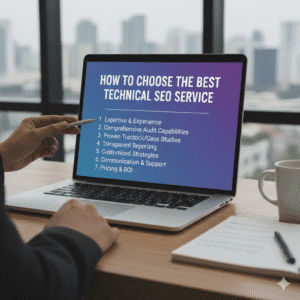
How to Choose the Best Technical SEO Service
Selecting a partner for your technical SEO solutions requires due diligence. You must test your current digital presence and set strategic goals. When interviewing potential providers, look for:
- Transparency: Are they willing to provide regular progress reports and project milestones?
- Measurable Outcomes: Do they track metrics? Do they focus on revenue, like organic traffic and conversion rates?
- Proven Track Record: Can they share case studies? Do these show successful tech fixes and migrations?
Before finalizing your choice, request a free proposal or a consultation call. This helps you understand their workflow better. It shows if their budget and timeline match your needs.
Conclusion: Future-Proofing Your Digital Presence
As we move deeper into 2026, the digital landscape is becoming more competitive. Search engine algorithms will keep changing. Speed, security, and structure form the main principles of technical SEO. These are crucial for success.
A professional technical audit isn’t for fixing errors. It creates a space where your content marketing and design can thrive. Optimize for crawling and indexation. This boosts your visibility and leads to higher conversion rates. You’ll also see a better return on investment. Don’t let hidden technical issues hold your website back. Take action today to transform your foundation and dominate the SERPs.