
Image link building is more than just adding visuals to a page-it’s a structured strategy for turning compelling images into high quality backlinks. When done correctly, it transforms ordinary graphics into linkable assets that attract attention from other websites and encourage them to credit your website as the original source. Instead of relying on shortcuts like keyword stuffing alt text or overloading a description, effective image link building focuses on creating something unique and valuable that improves engagement metrics and genuinely helps readers understand complex information.
At its core, image link building is about crafting shareable images that people naturally want to use in their own content. When someone embeds your infographic, photo, or data visualization and includes links back to your site, you earn authority organically. Sometimes backlinks come directly from attribution; other times, visuals make your page easier to discover via organic search, more visually appealing, and stronger in user experience. Considering that visual learners understand text with visuals 323% better, it’s no surprise that content creators are more likely to cite pages with high-quality images.
Why Visuals are the Secret to High-Authority Backlinks
The data supporting the use of visuals is staggering. According to the Semrush State of Content Marketing 2023 report, pages featuring visuals earn 555% more backlinks and 366% more shares than those without. This isn’t just about making a page look “pretty”-it’s about cognitive science. Research suggests that people understand text paired with visuals 323% better, and since roughly two-thirds of humans are visual learners, images make your content far more discoverable in organic search.
Whether it is an infographic about website loading times that gets linked thousands of times or a simple data chart that sees a massive jump in page views, the goal of image link building is to provide so much value that other creators naturally want to acknowledge your website as the original source.
Different Types of Assets That Attract Links
To make a real impact, you need to categorize your visual content based on what your target audience finds most useful.
-
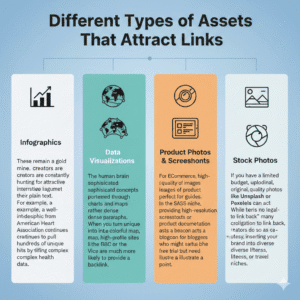
Infographics: These remain a gold mine. Content creators are constantly hunting for attractive infographics to augment their plain text. For example, a well-designed infographic from the American Heart Association continues to pull hundreds of unique hits by simplifying complex health data.
-
Data Visualizations: The human brain prefers sophisticated concepts portrayed through charts and maps rather than dense paragraphs. When you turn unique data into a colorful map, high-profile sites like the BBC or Vice are much more likely to provide a backlink.
-
Product Photos & Screenshots: For eCommerce, high-quality images of product features are perfect for gift guides. In the SaaS niche, providing high-resolution screenshots or product documentation acts as a beacon for bloggers who might not have a free trial but need to illustrate a point.
-
Stock Photos: If you have a limited budget, uploading original, high-quality photos to libraries like Unsplash or Pexels can act as a “link magnet.” While there is no legal obligation to link back, many creators do so as a courtesy, inserting your brand into diverse lifestyle, fitness, or travel niches.
How to Create and Host Your Linkable Assets
You don’t need an expert team to start. You can use AI tools like Midjourney or design platforms like Canva, Figma, and Adobe Illustrator to build unique assets. To find “hot” topics, use Google Trends or Exploding Topics to see what is trending in your industry. If you aren’t a professional creator, you might consider Outsourcing Link Building tasks related to design through freelancer marketplaces like Fiverr or Upwork to ensure your visual assets look professional.
Once created, the technical side of hosting is straightforward. You can use platforms like Imgur (ensure the title isn’t “hidden”) or professional Digital Asset Management software like SmugMug to manage your portfolio.
Optimizing and Protecting Your Creative Work
To ensure search engine crawlers properly index your images, you must optimize every text attribute. This includes:
-
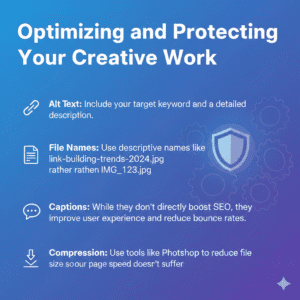
Alt Text: Include your target keyword and a detailed description.
-
File Names: Use descriptive names like link-building-trends-2024.jpg rather than IMG_123.jpg.
-
Captions: While they don’t directly boost SEO, they improve user experience and reduce bounce rates.
-
Compression: Use tools like Photoshop to reduce file size so your page speed doesn’t suffer.
Furthermore, you must protect your assets. Use Google reverse image search or tools like Image Raider to find “stolen” or unlinked images. If you find your visual being used without credit, reach out with a polite message asking for an attribution link. This simple “nudge” is often one of the easiest ways to secure a high-quality backlink.
Outreach and Social Distribution
Active outreach is what separates the professionals from the amateurs. Use tools like Ahrefs Content Explorer to find prospects writing about relevant topics and send a personalized pitch. Additionally, leverage social media as a distribution engine. Pinterest and Instagram are ideal for lifestyle and DIY niches, while LinkedIn is the premier spot for business-related infographics.
Image link building should be a core facet of your wider marketing strategy. By consistently investing in unique, valuable visual content, you ensure your brand remains visible and continues to earn authority in an increasingly crowded digital landscape.
The Mechanics Behind Strategic Image Distribution
Distribution is where many campaigns quietly fail. Early in my own experiments, I discovered how efficient URL-based sharing can be. Platforms like Imgur and Imgur.com allow you to create a new post, drag visuals into the upload box or select them from your files, add a compelling title, set the post to hidden, and copy the link for sharing. It’s quick and practical.
For brands that require tighter control, Digital Asset Management systems-robust paid software-offer structured workflows. SmugMug, with its free trial, provides a more polished solution suited to professional websites that treat asset organization seriously. No matter the platform, the goal is simple: make it easy for others to access and reference your visuals without friction.
Strategic Formats That Consistently Earn Authority
Not all visuals perform equally. The most effective image link building strategies revolve around specific formats: Infographics, Product photos, Logos, banners, Data visualizations, and Maps. These formats generate high authority backlinks because they present visual representations of ideas and data that enhance supporting content.
Infographics, while labour-intensive, remain one of the strongest formats. Tools like Visme and PowerPoint make it easier to design attractive infographics that outperform plain text. A notable example is an infographic from the American Heart Association published in October 2022, which attracted backlinks from 488 unique domains. Likewise, the Map of Corporate America by Steve Lovelace earned 770 links from 66 domains, including DR90+ websites such as Bloomberg and Business Insider. These examples show how visuals can highlight trends, communicate patterns, and build credibility across high authority domains.
Graphs and charts also travel well. Vince Nero once referenced a chart in a Buzz Stream article about link-building statistics, demonstrating how well-designed visuals extend beyond their original context. In SaaS, high-resolution screenshots often replace lengthy explanations-especially when a writer lacks access to a free trial and instead relies on product documentation or blog posts, as seen in a Rockcontent blog post referencing Ahrefs.
Distribution, Outreach, and Protection
Maximizing distribution amplifies results. Publishing visual content across articles strengthens multimedia-rich content strategies and increases the likelihood of natural image backlinks. Submitting to infographic directory sites such as Visually, Infographics Showcase, or the Infographic subreddit can expand reach, while thoughtful outreach to influencers and bloggers in your niche increases exposure. Suggesting your visual as an addition to a relevant article-or using it within a broken link building strategy-often secures contextual placements.
Monitoring stolen images and unlinked images is equally important. Using Google reverse image search, simply paste the image URL into the text box after clicking the camera icon to locate instances where your visual media appears without crediting. Each discovery represents a potential backlink. A short, professional message requesting attribution can convert lost visibility into secured authority.
FAQs
- What is image link building?
Image link building is a strategy where you create and distribute valuable visuals—like infographics, charts, or product photos—to earn backlinks when others use them and link back to your website. - Which types of images attract the most backlinks?
Infographics, data visualizations, maps, product photos, high-resolution screenshots, and unique custom illustrations tend to attract the most high-quality backlinks. - How do I optimize images for SEO?
Use descriptive file names, keyword-rich alt text, relevant captions, proper compression, structured data, and image sitemap tags to help search engines understand and rank your visuals. - How can I find websites using my images without linking back?
You can use Google reverse image search, Bing reverse image search, or tools like Image Raider and Ahrefs to identify unlinked image mentions and request proper attribution.