
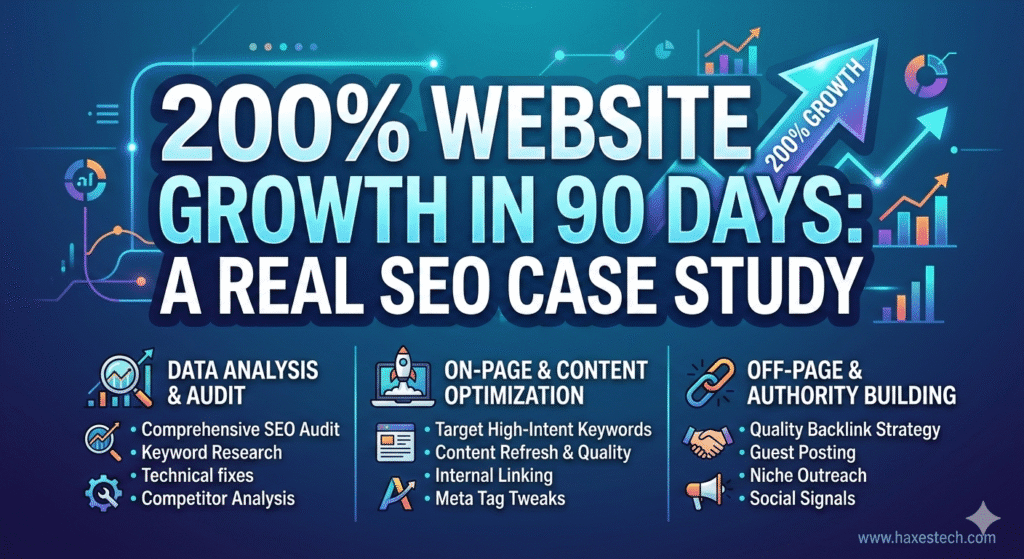
Increasing your website’s visibility can feel like a mountain to climb, but with the right plan, it is entirely possible to see massive growth quickly. In this case study, I will share exactly how we increased organic traffic by 200% in 3 months for our projects and Pure Professional website. By moving from a struggling site to a growth engine, we proved that focusing on user intent and technical health is the secret to digital success.
Understanding the Challenges
Before applying any SEO strategy, we carefully audited the website. During the audit, we discovered several problems that were stopping the site from growing. The website had low visibility in search engines, weak keyword optimization, and a poor backlink profile. The loading speed was also slow, which negatively affected user experience and search rankings.
Another important issue was the lack of structured data and technical optimization. These technical gaps created indexing problems and reduced the chances of ranking in search results. Because of these issues, the site struggled to appear for important search queries and could not attract consistent organic traffic.
Data Analysis and SEO Audit

To understand the website performance in detail, we used professional SEO tools such as Google Search Console, Google Analytics, Ahrefs, Screaming Frog, Surfer SEO, and PageSpeed Insights. These tools helped us identify the pages that were performing well and those that were not.
During the analysis, we found several issues such as keyword cannibalization, broken internal links, crawl errors, and pages that had high impressions but low click-through rates. Some pages also had no backlinks at all. Based on these insights, we created a 15-point SEO action plan focusing on three main areas: technical SEO, content optimization, and backlink development.
On-Page SEO Improvements
The next step in How We Increased Organic Traffic by 200% in 3 Months was improving on-page SEO. We started with detailed keyword research to find high-volume and low-competition keywords that matched user search intent. These keywords were added naturally to both existing pages and newly created content.
For example, we improved page titles to make them more specific and helpful for users. A general title like “Best Algo Tools” was replaced with a more descriptive title such as “Top Algorithmic Trading Tools in India (2024 Review).” This small change helped search engines understand the topic better and increased the chances of ranking.
We also updated older blog posts by adding new statistics, frequently asked questions, and structured data using FAQ schema. Visual elements like images and infographics were added to improve readability and user engagement.
Finding the Problems: Data and Audits
The sites were suffering from slow loading speeds, broken internal links, and “keyword cannibalization” (where two pages compete for the same word). We also found “low CTR” pages-these are pages that show up in search results but don’t get many clicks. This data helped us create a 15-point SEO action plan to fix the technical health of the site and prepare for a massive traffic spike.
Step 1: Smart On-Page SEO
To start how we increased organic traffic by 200% in 3 months, we focused on Keyword Mapping. We stopped guessing and started using tools like Surfer SEO to match our content to what people were actually searching for. For example, we took a simple title like “Best Algo Tools” and turned it into “Top Algorithmic Trading Tools in India (2024 Review).”

We also focused on:
- Content Refresh: We updated old blog posts with new stats, FAQs, and visuals to make them more helpful.
- Internal Linking: We improved how our pages link to each other. This helps Google crawl the site better and keeps readers on the site longer.
- Meta Tags: We rewrote title tags and meta descriptions to improve click-through rates.
- Structured Data: Adding things like FAQ Schema helped us show up in the “People Also Ask” section on Google.
Step 2: Fixing the Technical Foundation
A website can have great writing, but if it is slow or broken, it won’t rank. We focused on “Core Web Vitals” to make the site feel snappy. By compressing images and fixing the code, we lowered the “Largest Contentful Paint” (the time it takes for the main content to load) significantly.
We also removed “thin” pages that didn’t add value and made sure the site was perfect for mobile-first indexing. Using an updated XML sitemap and robots.txt gave search engines a clear map of our blog, ensuring every new post was indexed quickly.
Step 3: High-Impact Content Strategy
We didn’t just write random posts; we built “Topic Clusters.” By focusing on themes like “Trading Algorithms” or “Digital Marketing Courses,” we established ourselves as experts. Our weekly calendar included comparison blogs, tutorials (like how to use Python for trading), and beginner guides.
Each post used “long-tail keywords,” which are easier to rank for. We also used WebP image formats and ALT tags to keep things fast and accessible. This consistency is a major reason how we increased organic traffic by 200% in 3 months, as it showed Google that our site was active and reliable.
Step 4: Building Authority and Backlinks
Off-page SEO was our next priority. We shifted away from getting a high “quantity” of links and focused on “quality.” and We reached out to niche sites for guest posting and used HARO (Help A Reporter Out) to get mentioned in big publications.
We didn’t stop at just links and we repurposed our content into LinkedIn carousels and Twitter threads. We also designed infographics to capture Pinterest Traffic and drive users back to our main articles. This multi-channel approach pushed our Domain Rating (DR) from 12 to 24, moving many of our target keywords to the first page of Google.
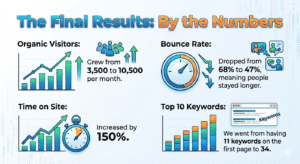
The Final Results: By the Numbers
The results of this how we increased organic traffic by 200% in 3 months strategy were life-changing for the brand:
- Organic Visitors: Grew from 3,500 to 10,500 per month.
- Bounce Rate: Dropped from 68% to 47%, meaning people stayed longer.
- Time on Site: Increased by 150%.
- Top 10 Keywords: We went from having 11 keywords on the first page to 34.
These numbers prove that SEO is not about luck. By combining technical fixes, high-quality content, and smart link building, any website can achieve compounding growth in a competitive niche.
Key Lessons from the Strategy
This case study shows that successful SEO growth does not come from a single tactic. Instead, it comes from combining multiple improvements such as better internal linking, optimized content, faster website speed, and high-quality backlinks.
Consistency also plays an important role. Publishing high-quality content every week helped build topical authority and trust with search engines. Technical health, content relevance, and a strong backlink profile together created a solid foundation for long-term growth.
This is the exact strategy behind How We Increased Organic Traffic by 200% in 3 Months, proving that with the right SEO plan, steady effort, and data-driven decisions, any website can achieve strong organic growth.
FAQs
- How long does it take to see SEO results?
SEO results usually take 3 to 6 months, depending on competition, website quality, and the SEO strategies implemented. - What are the main types of SEO used to increase website traffic?
The three main types are On-Page SEO, Off-Page SEO, and Technical SEO. Together they improve rankings, visibility, and website performance. - Can SEO really increase website traffic by 200%?
Yes, with a well-planned SEO strategy, quality content, strong backlinks, and technical optimization, significant traffic growth is possible. - Why is technical SEO important for a website?
Technical SEO helps search engines crawl, index, and understand your website, which improves rankings and user experience. - What is the role of backlinks in SEO?
Backlinks from high-authority and relevant websites increase domain authority and help improve search engine rankings.