
The digital landscape is evolving rapidly, and staying ahead of the SEO Trends to Watch in 2026 is essential for anyone looking to grow online. Search engines are no longer limited to matching keywords-they now focus on understanding user intent, context, and behavior.
Today, success in SEO depends on how well your content answers the why behind a search query. Whether users want information, a specific website, or a product, your content must align with their intent to rank effectively.
Understanding the Evolution of Search
Search engines have become smarter with the integration of artificial intelligence and semantic analysis. Instead of relying solely on keywords and backlinks, modern algorithms evaluate:
- User intent
- Content relevance
- Engagement signals
- Overall content quality
Businesses that adapt to these changes can significantly improve their visibility and reach the right audience more efficiently.
This shift means content must be helpful, structured, and engaging. Simply targeting keywords is no longer enough-you must solve real problems.
In 2026, websites that prioritize user experience and value-driven content will dominate search rankings.
Mastering Search Intent with Content Clusters
One of the most effective strategies in the SEO Trends to Watch in 2026 is focusing on search intent through structured content.
Rather than creating isolated articles, websites should build content clusters. This involves:
- Creating a main “pillar” page around a broad topic
- Supporting it with detailed subtopics
- Connecting all pages through internal links
For example, if your main topic is SEO, your cluster may include articles on technical SEO, link building, on-page optimization, and keyword research.
This structure helps search engines understand your expertise and improves user navigation. Strong internal linking also plays a key role in boosting rankings and authority.
The Growing Impact of AI in Search
Artificial intelligence is reshaping how search engines deliver results. Features like AI-generated summaries and answer engines now appear directly on search pages.
To stay competitive:
- Write clear, structured content
- Use schema markup (FAQ, product, author, etc.)
- Focus on accuracy and trustworthiness
When your content is easy to understand, search engines are more likely to feature it in AI-driven results—boosting visibility even without clicks.
The Rise of Zero-Click Searches
Zero-click searches are becoming more common, where users get answers directly from search results through:
- Featured snippets
- Knowledge panels
- “People Also Ask” sections
While this may reduce traffic, it increases brand exposure. Appearing in these features builds recognition and trust, which can lead to future conversions.
If your content consistently appears in these features, users begin to recognize your brand as a trusted source. Over time, this builds authority and increases the likelihood of future clicks and conversions.
Why E-E-A-T Matters More Than Ever
Google continues to prioritize Experience, Expertise, Authoritativeness, and Trustworthiness (E-E-A-T).
To build strong authority:
- Share original insights, case studies, or data
- Clearly display author credentials
- Maintain transparency and website security
High-quality, human-driven content is the foundation of long-term SEO success.Websites that demonstrate real expertise and trustworthiness are more likely to rank well and be featured in AI-generated results.
Search Intent Over Keywords
Traditional keyword stuffing is no longer effective. Search engines now understand relationships between words and context.
Modern SEO focuses on:
- Answering real user questions
- Using natural language
- Targeting long-tail keywords
By aligning your content with user intent, you improve both rankings and user satisfaction.Long-tail keywords are especially valuable because they reflect how users actually search. This helps attract more targeted and high-converting traffic.
Conversational Search and Voice Queries
With the rise of voice assistants and AI chatbots, search behavior is becoming more conversational. Users now search using full questions instead of short phrases.
To optimize for this trend:
- Use question-based headings
- Write in a natural, conversational tone
- Include long-tail keyword phrases
This approach increases your chances of appearing in voice search results. This makes your content more accessible and increases its chances of appearing in voice search results.
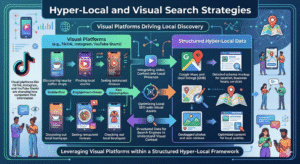
Hyper-Local and Visual Search Optimization
Local SEO is becoming more personalized. Search engines now consider location, behavior, and intent to deliver tailored results like “best coffee shop near me.”
At the same time, visual platforms are transforming search behavior. To stay competitive:
- Optimize images with alt text and metadata
- Use video captions and transcripts
- Create engaging thumbnails
Every visual element is now a searchable asset that can drive traffic.
The Power of User-Generated Content
User-generated content (UGC) is gaining importance as it reflects real experiences and builds trust.
Examples include:
- Reviews and testimonials
- Comments and discussions
- Forum and Q&A content
Encouraging user interaction signals credibility to search engines and improves engagement.
Link Building Still Matters (But Has Evolved)
Link building remains a key ranking factor, but the focus has shifted from quantity to quality.
Modern link-building strategies include:
- Creating valuable, shareable content
- Publishing research and case studies
- Earning links from relevant, niche websites
A strong internal linking structure further enhances site authority and crawlability.
The Expansion of Video and Visual Search
Search is no longer limited to text. Platforms like video-sharing apps and visual search tools are changing how users discover content.
To optimize:
- Add captions and transcripts to videos
- Use descriptive file names and alt text
- Focus on engaging visual storytelling
Visual content not only improves discoverability but also increases user engagement.
Measuring SEO Success with Modern Metrics
Traditional metrics like rankings and traffic are no longer enough. Today’s SEO success depends on:
- Engagement rate
- Dwell time
- Topic authority
- Conversion performance
Regular content updates and audits ensure your pages remain relevant and competitive.
User-Generated Content Builds Trust
User-generated content (UGC) is becoming increasingly valuable for SEO. Content created by users-such as reviews, comments, and discussions-adds authenticity and credibility.
Benefits of UGC include:
-
Increased trust signals
-
Higher engagement rates
-
Fresh and regularly updated content
Encouraging users to leave reviews or participate in discussions can improve your website’s authority.
Preparing for the Future of SEO
The future of SEO will continue to evolve with advancements in AI and user behavior. Businesses that prioritize:
- High-quality, user-focused content
- Strong authority signals
- Data-driven strategies
will stay ahead of the competition.
By understanding and implementing the SEO Trends to Watch in 2026, you can build a sustainable strategy that drives long-term growth and visibility.
Final Thoughts
SEO in 2026 is no longer about tricks or shortcuts-it’s about delivering real value. By focusing on user intent, content quality, and evolving technologies, you position your website for lasting success in search engines.
Adapting early to these trends ensures that your brand not only survives but thrives in the ever-changing digital landscape.
FAQs
- What are the most important SEO trends to watch in 2026?
Some of the biggest SEO trends in 2026 include AI-powered search results, zero-click searches, voice search growth, user experience optimization, and stronger focus on search intent. - Why is AI important for SEO in 2026?
AI helps search engines understand content, user behavior, and intent better. This allows them to deliver faster and more accurate search results to users. - What are zero-click searches in SEO?
Zero-click searches happen when users find answers directly on the search results page through featured snippets, AI summaries, or knowledge panels without clicking a website. - How can websites optimize for voice search?
Websites can optimize for voice search by using natural language, answering common questions, and focusing on long-tail keywords that match how people speak.