

Getting started with website monetization often begins with one important step-following a proper AdSense Approval Guide. Many bloggers and website owners want to earn advertising income from their content, but they often overlook the preparation required before applying. From my experience in online publishing, the process becomes much smoother when a website focuses on quality, structure, and genuine value for visitors. Once your site is prepared correctly, monetizing your platform with Google AdSense becomes a realistic and sustainable opportunity.
Why Publishers Choose Google AdSense
For many publishers, Google AdSense is the first platform they consider when planning a website monetization strategy. It operates as a powerful advertising network where advertisers display ads on publisher websites, allowing website owners to monetize content and generate online revenue.
One of the biggest advantages is its transparent revenue model. Each ad display produces ad impressions that can translate into advertising revenue. Google offers a revenue share model where publishers receive about 68 percent of the ad revenue, which makes the platform highly attractive compared with many other advertising services.
Another benefit is the simple account management system. Through a single AdSense account, publishers can manage multiple websites while tracking their earnings. This flexibility allows content creators to grow their digital publishing efforts and build long-term monetization opportunities.
Website Preparation Before Applying
A successful AdSense Approval Guide always begins with proper website preparation. Before submitting an application, a site should meet basic approval requirements and follow Google publisher guidelines.
The most successful websites usually maintain strong website quality standards, clear niche relevance, and complete AdSense policy alignment. These elements build publisher credibility and generate publisher trust signals that help Google recognize a website as a legitimate publishing platform.
When a site demonstrates clear purpose, useful content, and responsible publishing practices, it significantly improves its monetization eligibility during the approval review.
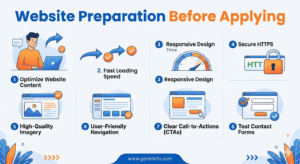
Build a Well-Structured Website
Website structure plays a critical role in approval success. A well-organized website design with a simple navigation menu makes it easier for both users and search engines to explore the site.
Essential pages such as a Home page, About Us section, Blog section, and Contact page should always be included. A clean layout, readable fonts, and a visually balanced design also contribute to a professional website appearance.
When the structure is clear and navigation is smooth, the overall user experience improves. This type of organized website architecture not only increases credibility but also raises the chances of successful approval.
Focus on High-Quality Content
Content is the foundation of every successful AdSense website. Google prefers websites that publish well-written articles that answer real questions and provide helpful information.
From my own experience managing content sites, the difference between approval and rejection often depends on the value offered to visitors. Informative articles, engaging content, and niche-focused topics help build authority and trust. For example, a cooking blog that shares useful recipes and kitchen tips naturally attracts readers and demonstrates clear value.
Original content is especially important. Avoid duplicate material and focus on creating plagiarism-free articles that improve readability and provide meaningful insights for your audience.
Follow AdSense Content and Policy Standards
To pass the review process, websites must follow Google AdSense content guidelines and policy standards. This means publishing valuable website content that is safe for advertisers and useful for readers.
Websites should also include important policy pages such as Privacy Policy, Terms of Service, and Contact information. These pages help establish website transparency and demonstrate professional credibility.
Respecting copyright rules is also essential. Always use original images or properly licensed materials to avoid policy violations that may lead to account suspension.
Improve User Experience and Website Performance
Technical performance also plays a major role in approval. A fast-loading website supported by good coding practices, caching systems, and optimized images provides a smoother browsing experience.
Websites should also maintain mobile friendly design so that users can easily access content across different devices. Fixing broken links, removing missing pages, and avoiding intrusive pop-ups can further improve site quality.
Google also discourages harmful activities such as unwanted redirects, automatic downloads, malware distribution, or disruptive advertising practices. A clean and secure browsing environment always improves approval chances.
Grow Organic Traffic Naturally
Traffic is another factor that influences the approval process. Although there is no strict minimum traffic requirement, a site with steady organic visitors often performs better during review.
Search engine traffic signals that users are discovering the website naturally. Applying SEO best practices can improve search visibility, attract genuine visitors, and strengthen overall trust indicators.
Avoid shortcuts such as paid traffic manipulation or click exchange programs. Instead, focus on sustainable growth through valuable content and consistent publishing.
Engage Your Audience and Build Community
Building an active audience can further strengthen your website’s reputation. Sharing content on social media platforms, encouraging comments, and distributing email newsletters can help maintain consistent engagement.
Guest posting opportunities can also increase cross-website exposure and attract new readers. Over time, these strategies help build a loyal audience base, which signals value to both advertisers and search engines.
Strong engagement also increases advertiser attractiveness because brands prefer placing ads on websites with active communities.
Applying for a Google AdSense Account
Once your website meets the requirements, the application process becomes straightforward. Begin by visiting the AdSense website and clicking the “Get Started” button. After signing in with your Google account, you will submit your website URL and complete the account registration steps.
During registration, you must confirm your country, agree to the AdSense terms and conditions, and provide accurate personal information such as address and payment details. Some users may also need to verify their phone number.
After placing the AdSense code within your website’s HTML head section, Google will begin the review process. This stage includes website evaluation, content analysis, traffic review, and policy compliance checks.
If everything meets the standards, you will receive an approval email notification and ads will start appearing on your website. If the application is rejected, you can review the feedback, fix the issues, and apply again.
For businesses seeking additional digital visibility while building their website authority, services like Google Places SEO Services can sometimes complement broader online growth strategies, though the main focus should always remain on building a high-quality website that satisfies AdSense guidelines.
By following this AdSense Approval Guide, website owners can build a solid foundation for long-term monetization, sustainable traffic growth, and a successful blogging journey.
Dealing with Rejection
If you receive an email saying you were rejected, don’t panic. Review the specific reason-usually, it is “low-value content” or “policy violations.” Fix the issues by removing thin pages, improving your SEO, or adding missing legal information, and then reapply.
Once you are successful, your vision of a profitable online presence becomes a reality. By following this AdSense Approval Guide, you are not just setting up ads; you are building a sustainable, ethical, and high-quality digital business.
FAQs
- What is an AdSense Approval Guide?
An AdSense Approval Guide explains the steps needed to prepare a website and meet Google AdSense policies so you can get your account approved. - How long does it take to get Google AdSense approval?
The approval process usually takes a few days to a few weeks depending on your website quality and policy compliance. - Is traffic required for AdSense approval?
There is no fixed traffic requirement, but having organic traffic and useful content increases the chances of approval. - What type of content is best for AdSense approval?
High-quality, original, and informative content that helps users and follows Google AdSense content policies works best. - Why do AdSense applications get rejected?
Applications are often rejected due to low-quality content, missing website pages, policy violations, or poor website structure.