
Black hat SEO techniques are unsafe methods used to manipulate search engines and boost rankings quickly without following rules. The focus keyword black hat seo techniques refers to these unethical SEO practices that try to cheat search engine systems instead of building real value. In simple words, they aim for fast ranking gains but often lead to penalties, loss of traffic, or even full removal from search results. Another important topic people often search with SEO is How Much Does SEO Cost in US, because many website owners compare safe SEO investment with risky shortcuts like these.
Search engines like Google use smart algorithms, Google Search Essentials, and strict guidelines to keep results useful for users. These systems are designed to detect manipulation, unnatural patterns, and low-quality content. Over time, search engines have become much smarter at identifying black hat SEO techniques and punishing them. While white hat SEO focuses on long-term growth, trust, and user experience, black hat methods focus on shortcuts that break rules and risk everything.
What is a black hat SEO?
Black hat SEO is a set of unethical search engine optimization practices used to manipulate SERPs (search engine results pages) and unfairly boost rankings. These methods violate search engine guidelines and go against the goal of providing value to users. Instead of improving content quality or user trust, they try to “game” search engine algorithms using shortcuts.
Common black hat SEO tactics include keyword stuffing, cloaking, invisible text, link farming, and deceptive redirects. These methods may create short-term ranking improvements, but search engines quickly detect them. Once detected, penalties can be applied, such as ranking drops, deindexing, or removal from search results.
Search engines are now smarter than ever. They analyze crawling data, indexing behavior, engagement signals, bounce rates, CTR manipulation, and structured data usage to identify manipulation. When trust is broken, recovery becomes very difficult.
White hat SEO, on the other hand, focuses on long-term growth, content quality, and user experience. It builds trust, authority, and stable rankings. Using ethical SEO strategies ensures that your website remains safe from penalties and continues growing organically.
What are the top 10 black hat SEO techniques?
There are several risky SEO tactics that fall under black hat SEO techniques. These include:
keyword stuffing, cloaking, invisible text, doorway pages, paid links (without nofollow), link farms, private blog networks (PBNs), content scraping, duplicate content, clickbait or misleading titles, schema markup misuse, and automated content generation.
These techniques often use bots, software tools, or automated scripts to scale manipulation. They try to increase rankings by targeting SERPs, manipulating engagement metrics, or creating fake popularity signals. However, search engines like Google detect these patterns through crawlers and algorithm updates.
Many of these tactics also harm user experience. For example, misleading content increases bounce rates, while duplicate pages reduce trust. In most cases, websites using these methods face penalties under Google guidelines.
1. Keyword stuffing
Keyword stuffing means overloading a webpage with too many keywords to manipulate rankings. Instead of natural language, content becomes repetitive and unreadable. This disrupts user experience and reduces content quality.
Search engine crawlers easily detect keyword stuffing, especially when SEO keywords are repeated unnaturally in paragraphs, footers, or hidden areas. It may bring short-term gains, but it leads to long-term penalties and ranking drops.
White hat SEO focuses on relevant content, semantic keywords, and natural writing instead of forcing search engine optimization keywords unnaturally.
2. Cloaking
Cloaking is a technique where different content is shown to search engines and users. For example, Googlebot may see optimized HTML content, while users see unrelated pages.
This is a clear violation of search engine guidelines. It misleads crawlers and creates transparency issues. Search engines quickly detect this mismatch using rendering tools and user-side data comparison.
Cloaking can lead to removal from search results, loss of rankings, and strong penalties.
3. Invisible text
Invisible text hides keywords using CSS tricks, font size 0, or background matching colors. The goal is to manipulate rankings without showing content to users.
Search engines treat this as a serious violation because it breaks trust and reduces user experience. It is often combined with keyword stuffing or footer hidden keywords.
Modern algorithms can easily detect hidden keywords, making this method risky and outdated.
4. Doorway pages
Doorway pages are low-quality pages created only to rank for specific keywords. They usually redirect users to other pages with no real value.
These pages manipulate SERPs by targeting multiple keywords like “bridge pages,” “portal pages,” or “gateway pages.” However, they offer no real content and harm user trust.
Search engines penalize such pages because they violate SEO policies and manipulate traffic flow.
5. Paid links (without nofollow)
Buying paid links without proper nofollow tags is another risky black hat SEO method. It artificially increases website authority and manipulates backlink signals.
Search engines consider this a violation because backlinks should be earned naturally. Paid links from high-authority sites may look useful, but they create unnatural backlink patterns.
This can lead to penalties, loss of trust, and reduced rankings.
6. Link farms and private blog networks (PBNs)
Link farms and PBNs are groups of websites created only to exchange or generate backlinks. They try to manipulate link equity and boost a “money site.”
These networks create unnatural link patterns that search engines easily detect. Once identified, the entire network can be penalized.
Organic link building and editorial backlinks are safer white hat alternatives.
7. Content scraping and duplicate content
Content scraping means copying content from other websites without permission. Duplicate content appears when the same text is used across multiple pages.
These practices reduce originality and violate copyright rules. Search engines penalize sites that use copied or auto-published content.
This leads to indexing issues, ranking loss, and poor SEO performance.
8. Clickbait or misleading titles
Clickbait uses exaggerated or misleading titles to attract clicks but does not deliver the promised content. This increases bounce rates and reduces user trust.
While it may increase traffic temporarily, engagement metrics drop quickly. Search engines notice this mismatch between title and content.
Over time, it damages rankings and brand reputation.
9. Misuse of schema markup
Schema markup misuse involves providing false structured data to search engines. For example, fake reviews or incorrect product ratings.
This manipulates rich snippets and SERP appearance. However, search engines detect incorrect metadata and apply manual penalties.
Proper schema usage improves visibility, but misuse leads to credibility loss.
10. Automated content generation
Automated content generation uses bots or AI tools to create large amounts of low-quality content. These pages often contain keyword stuffing and lack human oversight.
Search engines detect this through spam patterns and indexing behavior. Such content provides no real value and harms user experience.
It is often classified as content farm activity and can lead to ranking penalties.
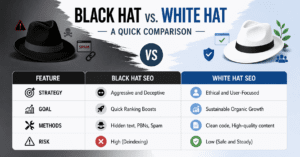
Black Hat vs. White Hat: A Quick Comparison
The difference between these two worlds is about long-term vision versus short-term greed.
| Feature | Black Hat SEO | White Hat SEO |
| Strategy | Aggressive and Deceptive | Ethical and User-Focused |
| Goal | Quick Ranking Boosts | Sustainable Organic Growth |
| Methods | Hidden text, PBNs, Spam | Clean code, High-quality content |
| Risk | High (Deindexing) | Low (Safe and Steady) |
Why should you avoid black hat SEO?
Using black hat SEO can cause serious problems like ranking drops, traffic loss, and deindexing. Search engines detect cloaking, hidden links, private blog networks, and unnatural backlinks easily.
These tactics may bring short-term gains, but they damage trust, brand reputation, and conversions. Recovery is also difficult and may require disavowing links, rewriting content, and full SEO audits.
Overall, black hat SEO creates more harm than benefit in the long run.
How does Bluehost help you stay compliant and grow ethically?
Bluehost helps website owners stay safe by offering SEO-friendly tools like Yoast SEO, Creative Mail, and WonderBlocks. These tools support proper meta tags, image alt text, structured content, and clean linking.
It also provides fast hosting with NVMe SSD storage, caching, uptime stability, SSL certificates, and mobile optimization. These features improve Core Web Vitals and search visibility.
Bluehost avoids risky practices like cloaking, spam links, or redirect abuse. Instead, it supports ethical SEO, internal linking, keyword research, and clean permalink structures.
Security tools, malware protection, staging environments, and CodeGuard backups help protect SEO progress and prevent penalties.
Final thoughts
Black hat SEO techniques may look attractive for quick results, but search engines are smarter than ever. Algorithms now detect keyword stuffing, cloaking, link schemes, and other manipulation methods very quickly.
These tactics often lead to penalties, ranking drops, and loss of trust. Instead, ethical SEO is the only safe way to build long-term success.
Using white hat SEO strategies, focusing on content quality, and maintaining user trust ensures stable rankings and organic growth.
FAQs
What are black hat SEO techniques?
Black hat SEO techniques are unethical methods used to manipulate search engine rankings. They include keyword stuffing, cloaking, link farms, paid links without nofollow, and automated content generation. These methods break search engine guidelines and can lead to penalties or removal from search results.
Why are black hat SEO techniques dangerous?
They can give short-term ranking boosts but usually result in long-term damage. Websites may lose traffic, rankings, or even get deindexed when search engines detect manipulation. Recovery from penalties is also difficult and time-consuming.
What is the difference between black hat SEO and white hat SEO?
Black hat SEO focuses on shortcuts and manipulation, while white hat SEO focuses on ethical strategies like quality content, clean backlinks, and user experience. White hat SEO is safer and supports long-term growth, trust, and stable rankings.
Can black hat SEO improve rankings quickly?
Yes, sometimes black hat SEO may improve rankings temporarily. However, search engines quickly detect these tactics using algorithms and crawlers, which often leads to ranking drops or penalties soon after.
What are examples of black hat SEO practices?
Common examples include keyword stuffing, cloaking, invisible text, doorway pages, paid links without proper tags, link farms, private blog networks (PBNs), duplicate content, clickbait titles, and schema markup misuse.
How does Google detect black hat SEO?
Google uses advanced algorithms, crawlers, user behavior signals, and manual reviews. It checks for unnatural backlinks, keyword abuse, duplicate content, and misleading pages to identify manipulation.
Can a website recover from black hat SEO penalties?
Yes, but recovery takes time. It usually involves removing bad backlinks, fixing content issues, disavowing spam links, and following white hat SEO practices consistently.