
In today’s competitive search landscape, off-page SEO techniques are essential. They are not optional. Many businesses focus on on-page tweaks. Successful brands create authority. They build trust and gain visibility beyond their own sites. Off-page SEO affects how search engines and people see your business online. Done right, it boosts your reputation. It improves rankings and makes your brand a trusted resource in your field.
What Off-Page SEO Really Means
At its core, off-page SEO happens outside your website. It focuses on improving how search engines check your site and how users trust your brand. Done right, it shows your business is trustworthy, relevant, and authoritative. This helps you rank higher, attract qualified traffic, and build lasting online authority.
I’ve watched small and mid-sized businesses change when their off-page strategy grew. As more people mentioned their brand, their visibility grew. They got more reviews and links from trusted sites. This helped them stand out online. Their reputation grew with Google and real users. This led to lasting growth and a stronger market position.
Off-page SEO also complements on-page and technical optimization. On-page SEO focuses on using the right keywords and improving user experience. Off-page SEO improves domain authority and how people see your site. It does this through endorsements, citations, and outside validation. Together, they form a holistic optimization strategy that signals long-term credibility.
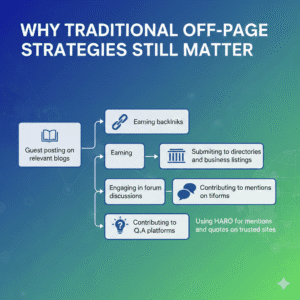
Why Traditional Off-Page Strategies Still Matter
Many traditional off-page methods still form the foundation of a solid strategy.
These include:
- Guest posting on relevant blogs
- Earning backlinks
- Submitting to directories and business listings
- Engaging in forum discussions
- Contributing to Q&A platforms
- Using HARO for mentions and quotes on trusted sites
Brands can improve by fixing broken links. They can also use social bookmarking and share content on social media. Encouraging reviews on Google My Business and industry-specific sites further strengthens trust signals. Algorithm updates show that classic methods alone won’t ensure success in 2026.
Traditional tactics build the base-but innovation drives competitive advantage.
Moving Beyond Backlinks: Building Real Authority
Google evaluates websites based on more than the quantity of links. The best off-page SEO techniques build real authority and trust. They focus on quality, not getting links.
Popular websites usually rank better for tough searches. This happens because they build a strong brand image. They get mentions on trusted platforms. They receive coverage on authoritative sites. Also, they keep a strong presence across various channels. These signals collectively boost credibility and strengthen brand recognition.
Modern campaigns also treat social media signals as indirect ranking drivers. Strategic posts, collaborations with influencers, and participation in social communities amplify reach. More brand visibility means more mentions, links, and discussions. This, in turn, boosts authority.
The Role of AI, Data, and Smarter Outreach
Smart teams use AI tools. They sharpen their outreach goals. They also boost link-building efforts. These tools find relevant websites and trending topics. They also generate content ideas and reveal collaboration opportunities with top sources. They also provide actionable insights to personalize outreach and improve response rates.
AI can handle follow-ups and routine tasks. But the long-term effect still relies on a personal, human touch. The smartest strategies combine automation with relationship-building.
Beyond outreach, predictive analytics helps brands secure high-impact mentions. Businesses can find valuable chances by watching trends, competitor mentions, and audience behavior. This helps them focus on areas where they can gain the most exposure and achieve real results.
Optimizing for E-E-A-T and Search Evolution
E-E-A-T-Experience, Expertise, Authoritativeness, and Trustworthiness-plays a crucial role in off-page SEO. Brands that follow these principles get natural references, positive reviews, and strong mentions. They also earn high-quality citations. Active participation in niche communities and collaborations with recognized experts further reinforce credibility.
For multi-location businesses and franchises, location-specific landing pages support franchise SEO efforts. These pages explain our services and outline our operational areas. They also draw targeted traffic from local directories, citations, partners, and news sites. They go far beyond basic local SEO tactics.
Search is changing with AI-driven summaries. This is part of Google’s Search Generative Experience (SGE). Brands must ensure their data is clean as users seek info from AI-generated answers. They should make brand mentions clear on third-party sites. Also, product and service details must stay consistent. Sharing insights on industry forums helps you stand out. It also boosts your chances of AI systems citing your content when they summarize it.
Content, PR, and Multimedia Authority
Digital PR is a strong modern strategy. It helps earn quality backlinks and gain media exposure. A cybersecurity company can get big news coverage. They can do this by sharing an annual threat report. Expert interviews and newsworthy research reports further compound authority.
Content marketing also fuels natural backlink acquisition. A fitness brand with a home workout guide can get links. These links can come from health blogs and fitness influencers. This boosts its backlink profile and brings in more organic traffic. SaaS companies can attract industry leaders by sharing insights on LinkedIn. This boosts referral traffic and builds credibility.
Podcast and video appearances provide another overlooked opportunity. When founders or experts are guests, they help brands. They create mentions, build backlinks, and increase social shares. This boosts recognition among engaged audiences. Repurposing that content across social channels amplifies authority even further.
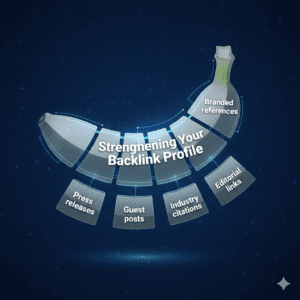
Strengthening Your Backlink Profile
Not all backlinks are equal. A healthy backlink profile must be diverse, relevant, and high-quality. Regular audits help track performance. Use tools like Moz, Ahrefs, SEMrush, and Google Search Console. They also spot harmful links. You should prune spammy or suspicious links and disavow them when necessary.
Diversification is critical.
A natural backlink profile has:
- Press releases
- Guest posts
- Industry citations
- Editorial links
- Branded references
Anchor text needs balance. Avoid using too many exact-match keywords. This can trigger algorithmic red flags.
A Practical Checklist for 2026
The future is for brands using smart off-page SEO techniques. This means blending traditional and advanced methods. This includes:
- Maintaining high-quality guest posting and structured link outreach
- Securing placement in trusted directories and local listings
- Monitoring brand mentions across authoritative sites
- Leveraging influencer partnerships and social media for amplified reach
- Optimizing location-specific pages for each branch or franchise
- Strengthening E-E-A-T signals across all digital touchpoints
- Tracking semantic relevance beyond anchor text
- Participating in podcasts, videos, and multimedia platforms
- Applying predictive analytics to identify high-value opportunities
- Aligning off-page strategies with evolving Search Generative Experience signals
- Highlighting author credibility alongside brand authority
In my work, especially in Advanced Technical SEO Consulting, I see great results. I combine basic outreach with link-building. Adding smarter, data-driven, brand-focused strategies makes a big difference.
Off-page SEO affects how Google sees your site. It also shapes how customers view your brand. These techniques, combined with strong on-page efforts, help you stand out. They attract qualified traffic and build a brand that people trust, remember, and come back to.
Frequently Asked Questions (FAQs)
1. What are cutting-edge off-page SEO techniques?
Cutting-edge off-page SEO techniques are modern strategies focused on building brand authority, trust, and visibility beyond your website. They go beyond traditional link building and include digital PR, AI-driven outreach, influencer collaborations, E-E-A-T optimization, predictive analytics, multimedia exposure, and aligning with AI-driven search experiences.
2. How is off-page SEO different from on-page SEO?
On-page SEO focuses on optimizing elements within your website, such as content, keywords, internal links, and user experience. Off-page SEO improves how search engines perceive your site through external signals like backlinks, brand mentions, reviews, citations, and social engagement.
3. Are backlinks still important in 2026?
Yes, backlinks remain a core ranking factor. However, quality, relevance, and context matter more than quantity. Modern off-page SEO prioritizes high-authority, topically relevant links and natural brand mentions rather than mass link acquisition.
4. How does E-E-A-T impact off-page SEO?
E-E-A-T (Experience, Expertise, Authoritativeness, Trustworthiness) influences how search engines evaluate credibility. Off-page efforts such as authoritative mentions, expert interviews, positive reviews, and industry citations strengthen E-E-A-T signals and improve ranking potential.
5. What role does digital PR play in off-page SEO?
Digital PR helps secure media coverage, authoritative backlinks, and brand recognition. Publishing original research, expert reports, or newsworthy insights can generate coverage from high-authority publications, boosting visibility and credibility.
6. How can AI improve off-page SEO strategies?
AI-powered tools help identify outreach targets, analyze backlink profiles, monitor brand mentions, predict high-value opportunities, and personalize communication. While AI improves efficiency, human relationship-building remains essential for long-term authority growth.
7. Do social media signals affect rankings?
Social media signals are indirect ranking factors. While they may not directly influence algorithms, strong social engagement increases brand visibility, content distribution, and opportunities for backlinks and mentions—all of which impact rankings.