

Developing a digital marketing strategy as a small business often feels like a struggle against a limited budget and fewer resources. However, using Effective Content Marketing Tips for Small Websites remains one of the most affordable and practical ways to grow today. Whether your team consists of just you or a few others, having a structured plan is a necessity for success. By posting fresh content on your business website, you ensure your brand remains relevant and visible to your customers.
1. Define and Identify Your Target Audience
Success in any campaign begins with a crystal-clear picture of the people you want to serve. Many small business owners make the mistake of trying to appeal to everyone, but your voice is most powerful when it speaks to a specific target audience. You must stop guessing who is on the other side of the screen. Conduct market research to understand their interests, how they behave in the digital space, and which social media platforms they use. By narrowing down your online audience early, you ensure your products and content align with their actual needs. Being present where your audience spends their time and providing content they truly want helps turn casual visitors into loyal customers.
2. Master Your Keyword Research
Visibility is the lifeblood of a small business. To secure a high search engine ranking on Google, you must move beyond generic terms. For example, a roofing contractor in Wilmington, Delaware, shouldn’t just target “roofs.” Instead, they should optimize for specific terms like “roof repairs,” “roof replacement,” or “roof storm damage repair.” Identifying these precise search terms ensures your business appears exactly when and where potential customers are searching.

3. Analyze Your Competitors
When you find yourself stuck for topic inspiration, the best research tool is often your competition. Look at the blogs and social media accounts of other businesses in your niche to see which topics and formats are gaining traction. You might even take a moment to learn How to Analyze Your Competitors’ SEO Strategy to see which keywords they are targeting. Don’t just mimic them; instead, look for “holes” or questions they haven’t answered. Use their work as a springboard to create something more unique and thorough that fills the gaps in the market. Understanding competitors and their content marketing strategies is crucial for developing your own strategy improvement
4. Provide Expertise and Useful Content
The era of aggressive sales pitches is over. Today, credibility is earned through honesty and providing value. Your audience is looking for a solution to their specific questions. By using your expertise to address their pain points, you position yourself as a leader in the industry. Whether it is through a tutorial or an informative article, giving your readers a meaningful takeaway boosts brand awareness without being pushy.
5. Stay Updated on Content Trends

Staying ahead means balancing industry-specific trends with general shifts in the digital world. While others might only focus on what is popular today, you should integrate visual, video, and purpose-driven content-strategies that have been effective for years. When you merge these broader trends with your specific field, you are much more likely to produce quality, shareable content that resonates with people far beyond your immediate circle.
6. Maintain a Regular Publishing Schedule
Consistency is the heartbeat of SEO. Search engines like Google are not fans of quiet, stagnant sites; they reward activity. By maintaining a blog and publishing fresh content on a consistent basis, you establish long-term authority. Even if you aren’t the only one writing about your topic, steady posting makes you look stronger and more reliable than digitally-stagnant competitors. Position yourself as a leader in your industry, influence SEO, and maintain a strong Google presence. Keep your blog updated with relevant posts that reflect your brand, provide enjoyment for your audience, and sustain regular activity. Steady content, consistent content frequency, and ongoing engagement reinforce your digital presence and ensure writing consistency.
7. Use an Editorial Calendar
For a small business with limited time, an editorial calendar is the ultimate timesaver. It serves as a guiding light for organization, brainstorming, and tracking deadlines. You should track your topics, keywords, and frequency on a weekly basis. This level of organization ensures your Effective Content Marketing Tips for Small Websites are actually put into practice without your strategy falling apart due to a busy schedule.
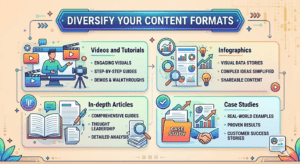
8. Diversify Your Content Formats
Don’t feel anchored to traditional blog posts. To truly engage a modern audience, experiment with different structures like:
- Videos and Tutorials
- Infographics
- In-depth Articles
- Case Studies
By tracking the results of these different formats, you can discover which medium your audience prefers, allowing you to double down on what actually drives engagement.
9. Make Sharing and Interaction Easy
If you want your content to go viral, you must remove all friction. Ensure your website has prominent share buttons and actively distribute your work on your own social media channels. Encouraging user interaction through comments is also vital. Be prepared to respond to those comments to build a community; when content is easily shared and discussed, its reach increases exponentially.
10. Monitor Your Results and Be Patient
You cannot manage what you do not measure. A successful campaign relies on monitoring metrics like visitor numbers and content shares. However, remember that patience is a core component of any marketing strategy. It often takes months of posting valuable content before you see a significant shift in sales.
Experiment With Multiple Content Formats
Don’t limit your website to just blog posts. Incorporate videos, infographics, in-depth articles, and tutorials to introduce content variety and address audience preference. Experiment content across different post structures, marketing formats, and content platforms. Monitoring content performance and track results improves platform optimization and helps identify the most effective audience engagement formats, making your content more dynamic and shareable.
Encourage Sharing and Conversation
Integrating share buttons simplifies blog sharing and encourages users to share content on social media accounts. Enabling blog comments allows user interaction, and responding to comments strengthens audience engagement. These discussions can turn your content into a talking point, resulting in more shared content, better social sharing, and improved content distribution. Over time, interactive blog posts help foster a loyal online community.
Professional Assistance
When needed, a digital marketing agency can provide valuable options and content marketing services to optimize strategy development, expand reach, and increase engagement. A skilled marketing team can perform keyword research, competitor research, implement on-page optimization, and conduct content audits. These beneficial services support your content marketing efforts, offer marketing support, and strengthen your content strategy with professional expertise.
As you grow, you might eventually look into a digital marketing agency for specialized services like on-page optimization or content audits. But for now, the work you do in-house provides the essential data needed to refine your plan. If you stay patient and continue using these Effective Content Marketing Tips for Small Websites, the momentum will eventually build, leading to sustainable growth and success.
FAQs:
Q1: What are effective content marketing tips for small websites?
A: Focus on knowing your audience, publishing relevant content consistently, using multiple formats, monitoring trends, and engaging users.
Q2: How often should small websites publish content?
A: Consistently, ideally on a regular schedule, to maintain credibility, improve SEO, and keep your audience engaged.
Q3: How can I analyze competitors for content marketing?
A: Review their online presence, blog posts, social media, keywords, and trends to improve your own strategy.
Q4: Why is a content calendar important for small websites?
A: It helps organize topics, track deadlines, plan seasonal content, and maintain consistent publishing.
Q5: Can small businesses manage content marketing in-house?
A: Yes, small businesses can handle it in-house with proper planning, or leverage agencies for professional support.