
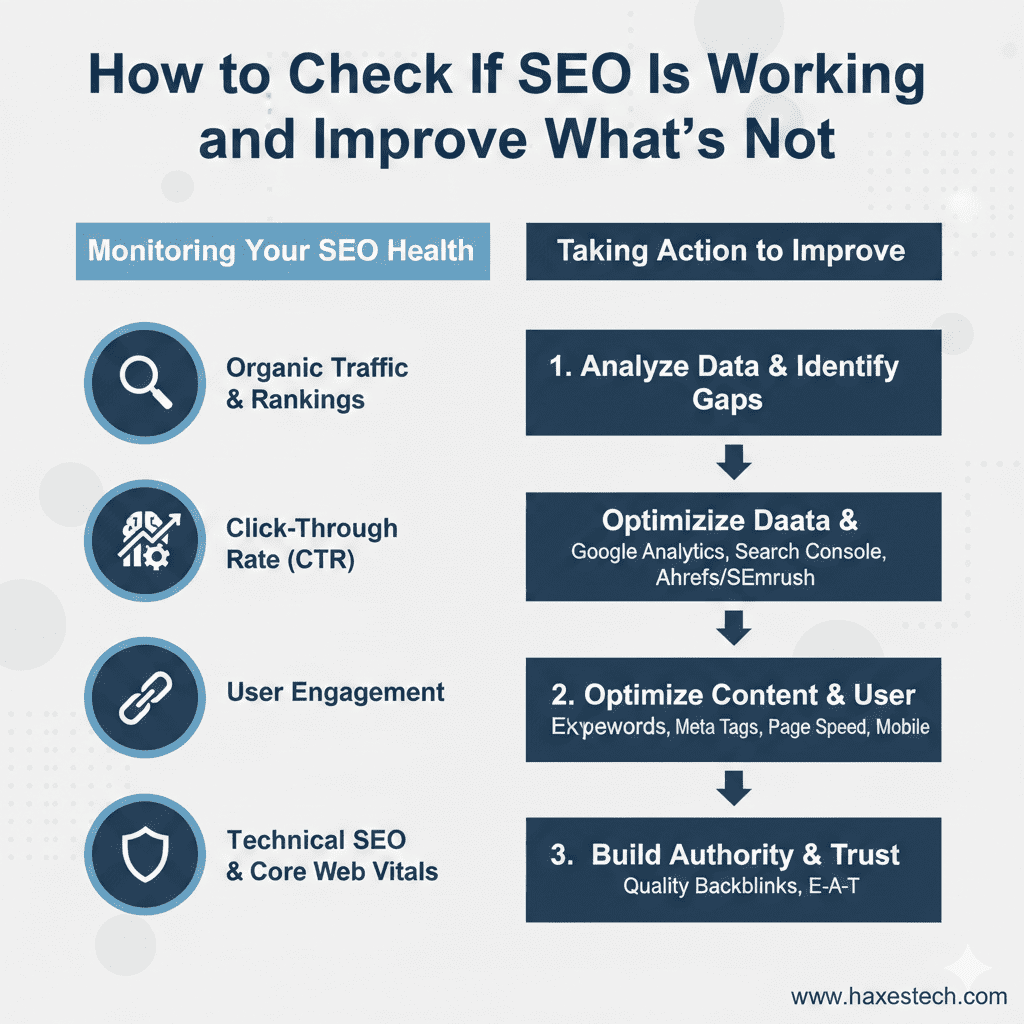
If you’re wondering how to check if seo is working, you’re not alone. Many business owners make a serious SEO investment-either by hiring an agency or spending months trying to figure it out themselves-only to feel frustrated when sales don’t immediately jump. The truth is, knowing how to check if seo is working isn’t about chasing vanity metrics or expecting overnight success. It’s about identifying the right data, understanding what it actually means, and measuring consistent progress that moves your business forward.
Start With SEO Performance, Not Guesswork
When I evaluate a campaign, I don’t rely on opinions-I look at SEO performance grounded in data. Real progress shows up across rankings, traffic, conversions, engagement, and authority metrics. You need a balanced view of your website, especially your organic traffic growth and how visitors behave after arriving from unpaid search.
Tools like Google Analytics and Google Search Console provide detailed reports on impressions, clicks, and patterns that shift month over month. Instead of panicking over daily fluctuations, compare month-over-month and year-over-year data to account for seasonality. A steady upward trend in organic traffic is often the first strong sign that your SEO strategy is gaining traction.
Organic Traffic: The First Proof of Progress
Organic traffic represents visitors from search engines like Google-not from ads or social media. This is where real brand discovery happens. Inside Google Analytics, review your traffic acquisition report to see exactly where visitors are coming from.
The key is to focus on long-term growth. Compare this month to last month, and the same month last year, for a more accurate picture. Consistent organic growth shows that more potential customers are discovering your business naturally through search.
Keyword Rankings: Look Beyond One Trophy Term
Many people assume SEO is just about ranking number one for a major keyword. In reality, sustainable growth comes from ranking for a wide range of search terms your customers actually use.
Long-tail keywords are especially valuable because they often signal higher intent-people ready to buy or take action. For local businesses, tracking visibility in the map pack is critical for attracting nearby customers.
Google Search Console allows you to monitor exact queries, keyword positions, and the increase in total keywords your site ranks for. Even moving from page three to page one is a significant win. Strong keyword rankings and improved search visibility indicate measurable progress.
Click-Through Rate (CTR): Are People Choosing You?
A top ranking means nothing if users don’t click. Your click-through rate (CTR) measures the percentage of people who see your listing in search results and click on it.
If CTR is low, your title tag and meta description may not align with searcher intent. A compelling listing that resonates with your target audience can dramatically improve results. A rising CTR not only increases traffic but can also positively influence rankings by signaling to Google that your page is a good match for the query.
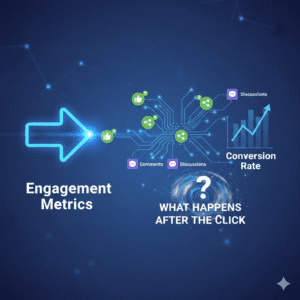
Engagement Metrics: What Happens After the Click
Traffic alone doesn’t equal success. Strong website engagement shows that visitors are genuinely interested and interacting with your content.
Instead of obsessing over bounce rate, focus on engagement rate in Google Analytics 4. This metric measures the percentage of sessions where users are actively engaged-such as staying longer than 10 seconds, triggering a conversion event, or visiting multiple pages.
High engagement signals that you’re attracting the right traffic and delivering valuable content that meets user expectations.
Conversions: The Ultimate Proof
If you truly want to understand how to check if seo is working, look at conversions. This is where SEO directly impacts your bottom line.
A conversion could be filling out a contact form, signing up for a newsletter, or making a purchase. Define what matters most for your business goals and track those events inside Google Analytics. An increase in conversions from organic traffic provides clear evidence that your search engine visibility is turning into actual business growth and successful lead generation.
Backlinks and Authority: Building Trust Over Time
Your backlink profile plays a major role in long-term visibility. Backlinks act as votes of confidence from other websites. High-quality links from authoritative sites are far more valuable than dozens of links from low-quality domains.
Using SEO tools like Ahrefs, SEMrush, or Moz, you can monitor new backlinks and assess their quality. Growth in strong backlinks strengthens your overall authority and improves your chances of higher rankings. This balance between on-page SEO and off-page SEO is essential for sustainable success.
Technical SEO: The Foundation Behind Everything
Even the best content will struggle to rank if your technical foundation is weak. A technical SEO audit ensures search engines can access, crawl, and index your pages properly.
Use Google Search Console’s Coverage report to identify indexing issues. Optimize page speed and meet Core Web Vitals benchmarks for loading performance, interactivity, and visual stability. Mobile-friendliness is critical because Google primarily uses the mobile version of your site for indexing.
Improving technical performance often leads to better rankings, stronger engagement, and fewer crawl errors over time.
Measuring Authority and Long-Term Visibility
Beyond traffic and rankings, metrics like Domain Authority-developed by SEO software companies-help estimate ranking potential based on backlink quantity and quality. While not an official Google metric, gradual improvement often reflects stronger overall SEO health.
Search Visibility is another powerful indicator. It measures your share of possible clicks across tracked keywords. When that percentage grows, it means you’re capturing a larger slice of your industry’s online space and outperforming competitors more consistently.
Turning Data Into Strategy
Understanding how to check if seo is working requires context. Rankings fluctuate due to algorithm updates, competition, and changing user behavior. A temporary drop doesn’t automatically mean failure.
Benchmark against competitors using tools like SEMrush and Ahrefs to compare traffic, backlinks, and keyword performance. Conduct regular website audits, update content, fix technical issues, and continue building high-quality backlinks. This cycle of continuous improvement ensures your strategy evolves with the market.
For businesses in competitive niches-including industries like SEO for Architects-the principles remain the same: measure what matters, focus on user intent, and track meaningful growth over time.
When you consistently monitor the right metrics and make data-driven decisions, SEO stops feeling like guesswork and starts becoming a predictable engine for long-term authority and sustainable business growth.

Technical SEO Health and Core Web Vitals
A healthy website is the foundation of all ranking efforts. If search engines cannot crawl or understand your data, you simply will not rank. A technical SEO audit should focus on:
-
Crawlability and Indexability: Checking for errors in the Search Console Coverage report.
-
Page Speed: Using PageSpeed Insights to ensure fast loading times.
-
Mobile-Friendliness: Ensuring the mobile version of your site is the priority, as per mobile-first indexing.
-
Core Web Vitals: Measuring interactivity and visual stability.