
Understanding how to conduct a technical seo site audit is essential if you want your website to perform well in search results. A technical seo site audit works like a full health check-up. It helps search engines crawl, index, and rank your pages correctly. Even the best content can stay hidden if technical issues are ignored. This guide will walk you through a simple, practical process using a technical seo audit checklist, helpful tools, and proven methods that real experts use every day.
A technical audit seo is not just about fixing errors. It is the foundation of your entire online presence. If your site is slow, poorly structured, or blocking crawlers, you will lose traffic, leads, and money. Many businesses invest in content and ads but ignore technical problems. This is where technical seo audits and even professional technical seo audit services or a seo technical audit service can make a big difference. They ensure your website is visible, fast, and easy to use for both users and search engines.
What is a Technical SEO Audit?
A technical seo audit is a detailed review of your website’s technical health. Think of it like checking the engine of a car instead of its design. It looks at your code, structure, and performance to make sure everything works properly. The goal is simple: help search engines understand your site and improve rankings.
A good audit checks if your pages are crawled, indexed, and displayed correctly. It also ensures your website is fast, secure, and user-friendly. Whether you use a technical seo audit tool, a seo technical audit tool, or manual methods, the goal remains the same-fix issues that stop your website from growing.
Why Technical SEO Matters for Your Business
Technical SEO is the base of all digital marketing. Without it, your SEO efforts will not work properly. If search engines cannot read your website, they will not rank it. This leads to low visibility and missed opportunities.
A strong audit improves user experience, increases site speed, and helps your pages appear in search results. It also supports your marketing campaigns and makes your website accessible to your audience. Investing in technical seo audit services or using reliable technical seo audit software can help you identify hidden issues and fix them before they impact your performance.
Neglecting the technical side means your marketing spend is being wasted. A solid technical audit seo ensures that your traffic doesn’t evaporate due to a poor user experience. It creates a bridge between your content and your audience, making sure your site is accessible, fast, and easy to navigate.
Technical SEO Audit Checklist
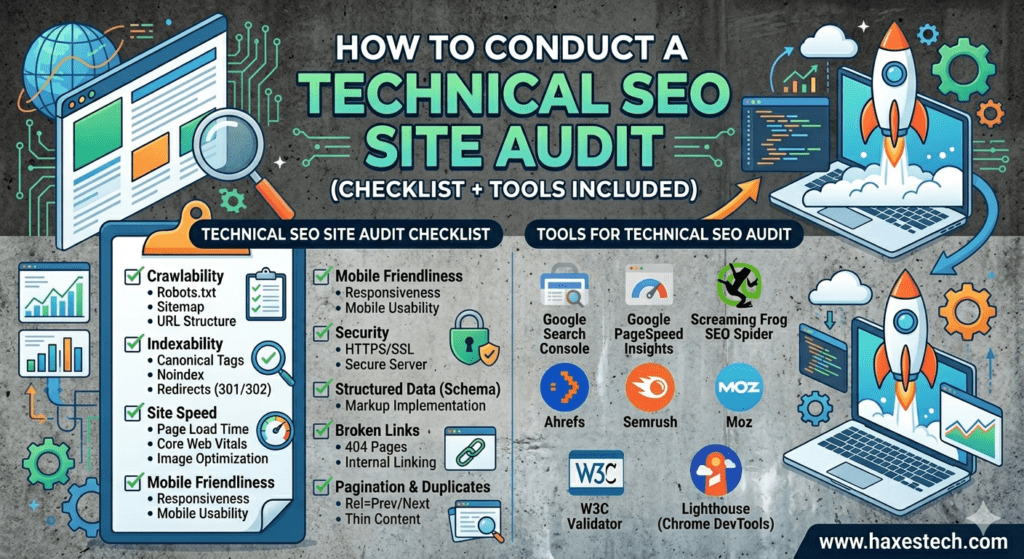
Using a technical seo audit checklist or seo technical checklist keeps your work organized and ensures you do not miss anything. A proper checklist includes:
- Indexability and accessibility
- Rendering and JavaScript
- Duplicate content
- Pagination
- URL structure
- Schema markup
- Mobile optimization
- Page speed
This checklist acts as your roadmap when performing a technical audit seo and helps maintain consistency in your audits.
Step-by-Step Process to Conduct a Technical SEO Audit
To start, use a technical seo audit tool like Screaming Frog or Lumar to crawl your website. This helps you find broken links, missing tags, and redirect issues. Combine this data with Google Analytics and Google Search Console to identify deeper problems like orphaned pages.
Next, check indexability. Make sure important pages are indexed and not blocked by robots.txt or marked as noindex. Review your XML sitemap to ensure only valuable pages are included.
Then, analyze your site structure and internal linking. Important pages should be easy to reach from the homepage. Use clear anchor text and logical navigation so both users and search engines can move through your site easily.
Performance, Mobile & Technical Elements
Page speed is a major ranking factor. Use Google PageSpeed Insights and Lighthouse to check load time, images, and scripts. Improving speed helps both rankings and user experience.
Mobile optimization is also critical. With mobile-first indexing, your site must work perfectly on all devices. Check layout, screen sizes, and JavaScript rendering to avoid issues.
On-page elements are another key part of a technical seo site audit. Review title tags, meta descriptions, and header tags. Make sure they are unique and properly structured. Fix duplicate content and thin pages that can confuse search engines.
Security, Content & Reporting
Security should never be ignored. Ensure your website uses HTTPS and fix mixed content issues. Work with your development team to resolve vulnerabilities.
Next, evaluate your content and index efficiency. Remove low-value pages and fix issues that waste crawl budget, such as unnecessary paginated URLs.
Finally, create a technical seo audit report. This report should clearly explain all issues and solutions. Divide tasks into high, medium, and low priority. This helps teams focus on what matters most. A well-structured report is the backbone of any successful seo technical audit service.
Tools for Technical SEO Audits
Using the right tools makes your audit faster and more accurate. Popular options include:
- Crawlers like Screaming Frog
- Performance tools like Google PageSpeed Insights
- Analytics platforms like Google Analytics
Advanced Technical Audit Insights
Advanced technical seo audit software can also provide deeper insights and automation, making it easier to manage large websites.
Dealing with JavaScript and Rendering
Modern websites rely heavily on JavaScript. To ensure google-bot can see your content, use tools like Sitebulb or the Gray Dot Co Chrome Extension. These help you diagnose if your content structure or layouts are being hidden from search engines.
Fixing Technical Duplicate Content
This often happens because of filtering parameters in a URL. For example, a “blue shirt” page might have ten different URLs because of size or color filters. Use a seo technical checklist to ensure you have used canonical tags correctly. A canonical tag tells Google, “This is the main version of the page, ignore the others.”
Improving URL Structure and Schema
Your URLs should be clean, simple, and trustworthy. Avoid long strings of random numbers. Instead, use your keyword in the slug. Additionally, use Schema (structured data) to help search engines understand exactly what your page is about, whether it’s a product, a recipe, or a review. Tools like Semrush and Sitebulb Rich Results Test are great for troubleshooting your markup.
My Experience & Final Thoughts
From my experience, every successful website relies on a strong technical foundation. A proper technical seo audits process helps uncover hidden issues and improve performance over time. Many businesses choose expert help from companies like Modo25, but even if you do it yourself, following a clear system is key.
If you focus on structure, speed, and usability, your website will perform better in search results. Keep your process simple, follow your checklist, and always look for ways to improve. This is how you build a website that not only ranks but also converts.
FAQs
- What is a technical SEO site audit?
A technical SEO site audit checks your website’s health to ensure search engines can crawl, index, and rank your pages properly. - Why is a technical SEO audit important?
It helps fix issues like slow speed, broken links, and poor structure that can hurt rankings and user experience. - Which tools are best for a technical SEO audit?
Popular tools include Screaming Frog, Google Search Console, and Google PageSpeed Insights. - How often should I perform a technical SEO audit?
It’s best to run a technical SEO audit every 3–6 months or after major website updates. - Can beginners conduct a technical SEO audit?
Yes, beginners can follow a checklist and use simple tools to identify and fix basic SEO issues.