
Understanding How to Optimize Blog Content for Google Ranking is one of the most important skills for anyone who wants to grow a website through organic traffic. Many bloggers publish articles regularly, but they fail to see results because their content is not properly optimized for search engines. When a blog post follows the right SEO structure, it becomes easier for Google to understand the topic and rank it in search results. Proper optimization improves visibility, helps attract targeted visitors, and increases the chances of appearing on the first page of Google.
Why Blogging is Important for SEO
Blogging plays a powerful role in improving website rankings. When you publish fresh and useful content regularly, it signals to search engines that your website is active and relevant. Blogs also allow you to target long-tail keywords and niche search terms that users frequently search for online. Well-written blog posts keep readers engaged, reduce bounce rate, and improve dwell time. All these signals help search engines trust your content and rank it higher in search results.
Start with Smart Keyword Research
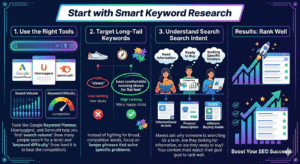
The foundation of any great post is knowing what your audience is searching for. Many beginners make the mistake of guessing topics, but successful bloggers use data.
- Use the Right Tools: Tools like Google Keyword Planner, Ubersuggest, and Semrush help you find “search volume” (how many people search for a term) and “keyword difficulty” (how hard it is to beat the competition).
- Target Long-Tail Keywords: Instead of fighting for broad, competitive words, focus on longer phrases that solve specific problems.
- Understand Search Intent: Always ask why someone is searching for a term. Are they looking for information, or are they ready to buy? Your content must match their goal to rank well.
Optimize Your On-Page Elements
Once you have your keywords, you need to place them where Google can see them. To effectively understand how to optimize blog content for Google ranking, you must focus on these key areas:
- Title Tags and Meta Descriptions: Your title tag tells Google what the page is about, while the meta description is the short summary people see in search results. Include your main keyword in both to encourage clicks.
- Strategic Header Tags: Use your focus keyword in the H1 (main title) and naturally within H2 and H3 subheadings.
- Clean URL Structure: Keep your web addresses short and descriptive. Remove extra words and include your primary keyword.
- Image Optimization: Large images slow down your site. Compress your photos before uploading and always add “alt text”-a short description that helps search engines understand the image.
Prioritize Quality Over Length
There is often a debate about whether long or short blog posts are better. The truth is that Google rewards quality and “helpfulness” over word count. Your goal should be to cover a topic comprehensively so the reader doesn’t need to look anywhere else. Use bullet points, short paragraphs, and clear sections to make your content easy to read. While doing this, be sure to avoid Common SEO Mistakes and How to Fix Them, such as “keyword stuffing,” which is when you repeat words too many times and make the writing feel unnatural.
Technical SEO and Site Performance

Even the best writing won’t rank if your website is broken. A quick technical audit can ensure your site is healthy.
- Mobile-Friendliness: Most people search on their phones. Ensure your blog looks great and is easy to navigate on small screens.
- Page Speed: Slow websites frustrate users and hurt your rankings. Use tools like Google PageSpeed Insights to find and fix bottlenecks.
- Internal and External Linking: Link to other posts on your own site to help Google navigate your content. Also, link to high-quality outside sources to back up your claims and build credibility.
Post-Publishing Strategy
Learning how to optimize blog content for Google ranking doesn’t end when you hit “publish.” To keep your traffic growing, you should:
- Update Old Content: Refresh older posts with new data and images to keep them relevant.
- Promote on Social Media: Share your work on LinkedIn, X, or Facebook to drive initial traffic.
- Monitor Results: Use Google Search Console to track which keywords are bringing people to your site.
Improve Content Structure and Readability
A well-structured article improves both user experience and SEO performance. Use headings, subheadings, bullet points, and short paragraphs to make the content easy to scan. Adding visuals such as images, charts, or videos can also improve engagement. When readers spend more time on your page, search engines consider your content valuable and may rank it higher.
Use Internal Links and Backlinks
Internal linking helps connect related pages on your website and improves navigation for visitors. It also helps search engines discover new content and understand the structure of your website. Backlinks from other websites act as trust signals that show your content is credible and useful. Building strong links can significantly improve domain authority and ranking potential.
Improve Mobile Friendliness and Page Speed
Most users access websites from mobile devices, so your blog must be mobile-friendly. A responsive design ensures that your content looks good on all screen sizes without requiring zooming or horizontal scrolling. Page speed is another important ranking factor because slow websites create a poor user experience. Tools like Google PageSpeed Insights and Google Lighthouse can help identify performance issues and improve loading time.
Perform Regular Blog Audits
Running regular blog audits helps identify technical issues that may affect your rankings. A proper audit checks for broken links, slow loading pages, crawl errors, and missing metadata. Fixing these problems improves your website’s overall performance and ensures search engines can properly index your pages. Updating older articles with fresh information can also boost rankings and bring new traffic.
Monitor Performance and Update Content
SEO is an ongoing process, not a one-time task. Successful bloggers monitor their performance using tools like Google Analytics and Google Search Console. These platforms help track keyword rankings, traffic, and user behavior. Updating content with new statistics, improved internal links, and fresh insights keeps your blog relevant and competitive.
Final Thoughts
Learning How to Optimize Blog Content for Google Ranking requires a combination of strong keyword research, high-quality writing, and technical optimization. When bloggers focus on helpful content, proper structure, and continuous improvements, their articles gain better visibility in search results. While many guides discuss Common SEO Mistakes and How to Fix Them, the most effective strategy is simply to follow proven SEO practices consistently. Over time, this approach builds authority, increases organic traffic, and supports long-term growth for your website.
FAQs
- What does it mean to optimize blog content for Google ranking?
It means improving your blog posts using SEO techniques like keyword placement, quality content, internal links, and proper headings so Google can rank them higher in search results. - How often should I update my blog content for better rankings?
Updating blog content every few months with fresh information, new keywords, and improved structure can help maintain and improve rankings. - Why is keyword research important for blog SEO?
Keyword research helps you understand what people are searching for so you can create content that matches their needs and attracts organic traffic. - Does blog content length affect Google ranking?
Content length can help if the article covers the topic completely, but quality and usefulness are more important than word count.