
The Step-by-Step Guest Posting Strategy for Beginners is one of the most effective ways to grow your online presence and attract new readers. Guest posting simply means writing an article for another website in your industry. When done correctly, it helps you reach a new audience, build credibility, and get backlinks that improve your website visibility in search engines. Many marketers and business owners have seen impressive growth using this approach, and in some cases it has even contributed to strategies like how we increased organic traffic by 200% in 3 months.
Guest posting is not just about publishing content anywhere. It is a strategic process where you share useful knowledge with readers on relevant blogs while linking back to your own website. Over time, this builds authority, increases brand awareness, and brings targeted traffic to your site.
What Is Guest Posting?

Guest posting means writing a blog article for another website instead of your own blog. The goal is to share helpful information with a new audience while also building your online profile. Many entrepreneurs and businesses use guest posting as part of their marketing strategy because it allows them to reach readers who may never have discovered their website otherwise.
Most guest posts include a short author bio where you can place a link to your website. These backlinks help readers visit your site and learn more about your services or content. When published on high-quality blogs in your industry, guest posts can also strengthen your brand identity and position you as an expert in your field.
The True Story of Backlinks and SEO
There is a lot of talk about SEO, but the most important thing to remember is authenticity. Backlinks help Google understand that your site is important. However, you must be careful. If you post poor-quality content on “spammy” sites, Google might penalize your rankings.
To keep your site safe, SEO specialists suggest using the rel=”nofollow” or rel=”sponsored” tags if a post is paid. Your goal should always be to get a genuine click-through from a reader who is actually interested in your work, rather than just trying to trick search engines.
Step 1: Define Your Goals and Find Opportunities
Before you start writing, use the S.M.A.R.T technique to set your goals. Make sure your objectives are Specific, Measurable, Attainable, Relevant, and Time-oriented. Once you know what you want to achieve, start looking for reputable websites in your niche.
You can find these by searching Google for terms like “write for us,” “submit a post,” or “guest blog.” Tools like BuzzSumo or Alltop are also great for finding high-performing blogs in your industry. Once you have a list of sites, try to build a relationship with the blog owner by commenting on their posts or engaging with them on social media before you send a pitch.
Step 2: Prepare a Catchy Pitch
Editors receive hundreds of emails every day. To stand out, your pitch needs to be professional and personalized. Avoid generic templates. Instead, mention a recent article they wrote or start an open-ended conversation about a topic in your industry. Show them your previous successful work to prove your credibility. A short, concise email that clearly explains your guest blog idea is much more likely to be opened.
Step 3: Write a Mind-Blowing Article
When your pitch is accepted, follow the site’s publishing guidelines exactly. This includes word count, formatting, and style. Do deep research and fact-checking to ensure your content provides real value.
-
Use original images: High-quality visuals and infographics increase shares.
-
Add structure: Use clear headings (H1, H2, H3) to make the text easy to read.
-
Be authentic: Write in a way that resonates with the target audience.

Step 4: Optimize Your Landing Pages
A successful Step-by-Step Guest Posting Strategy for Beginners doesn’t end with the article. The link in your guest post should lead to a dedicated landing page on your site. This page should offer a solution to the reader’s problem, like a free guide or a newsletter sign-up. This helps turn temporary visitors into permanent followers and potential customers. Make sure your page is mobile-friendly and loads quickly to keep visitors from leaving.
Step 5: Submit and Leverage Your Post
After a final round of editing, submit your article. If the editor asks for changes, handle them quickly and politely. Once the post is live, your work isn’t done! Share it on your social media handles, include a blurb in your email newsletter, and send it to your current client list.
Marketing your guest post helps drive even more traffic to the host site, which makes the editor happy and makes it easier for you to land even bigger guest posting spots in the future. Finally, make sure your online portfolio is up to date so that when new visitors arrive, they see your very best work.
Why Blogging Matters Before Guest Posting
Before focusing on guest blogging, it is important to understand the value of blogging itself. Blogging allows you to build your profile and grow your writing portfolio. It also helps you inform and entertain your audience while sharing ideas about topics related to your industry.
For professionals such as content writers, copywriters, and digital marketers, blogging is a great way to show writing skills and content expertise. Creatives such as photographers, artists, models, and architects also use blog posts to educate visitors and discuss topics that matter in their industries. By consistently publishing useful content, you can grow an audience and establish authority in your niche.
Benefits of Guest Blogging
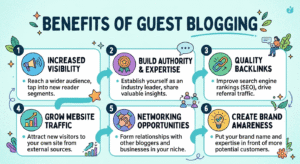
One of the biggest advantages of guest blogging is brand exposure. Publishing on high-traffic blogs allows new visitors to discover your work and increases traffic to your own website through backlinks. When those blogs are closely related to your niche, the readers who click your links are often your ideal audience.
Guest blogging also helps build credibility. If you regularly publish articles on respected websites in your industry, people begin to recognize your expertise. This can lead to new clients, partnerships, and career opportunities. Many writers also use guest posts as writing samples in their portfolio, which makes it easier to show potential clients the quality of their work.
Optimize Your Portfolio for New Visitors
When guest posts start sending traffic to your website, your portfolio must be ready for those visitors. Make sure your site clearly shows your work samples, writing skills, and expertise. Adding an email sign-up form can help you grow your audience and stay connected with readers who discover you through guest posts.
Your website should also include a blog section where visitors can read more of your content. When people enjoy your guest article, they often want to explore more of your work. A well-organized portfolio helps turn those visitors into long-term followers or clients.
FAQs
- What is guest posting in SEO?
Guest posting is writing and publishing an article on another website or blog to reach a new audience and gain backlinks to your site. - How does guest posting help with SEO?
Guest posting helps SEO by building high-quality backlinks, increasing website authority, and bringing targeted traffic from other websites. - How do beginners start guest posting?
Beginners can start by finding blogs in their niche, reading guest posting guidelines, pitching article ideas, and writing high-quality content. - Are guest posts good for building backlinks?
Yes, guest posts are one of the most effective ways to build natural and high-quality backlinks from relevant websites.