

Building a website is only the first half of the journey. The second half is making sure people can actually find it. In digital marketing, we use off-page SEO directory submission. This method shows search engines that our site is important and trustworthy. If you’ve ever seen a phone book or a mall map, you get the basics of this strategy. Put your name in the right places. This helps both people and computer programs see what you offer.
What is Directory Submission?
To put it in very simple terms, an online directory is like a big digital library or a catalog. It holds lists of websites and organizes them into groups based on what they do. For example, there are groups for “Plumbers,” “Digital Artists,” or “Local Coffee Shops.”
With off-page SEO directory submission, you place your website link in digital catalogs. This helps boost your site’s visibility. This is a systematic process. It is not about being “found” by a random person. It is a foundational rule of SEO that helps you set the stage for long-term success. When you do this correctly, you provide a clear overview of your brand to the world. This helps you drive traffic which is a fancy word for “visitors” directly to your pages.
Why Should You Care About Directory Submission?
You might wonder why we spend time filling out forms on other websites. The reason is simple: backlinks. A backlink is when another website links to yours. Search engines like Google look at these links as “votes of confidence.” When many trusted directories link to you, search engines notice. They think, “This site is a good source of information.”
This process is crucial for building your “Authority.” Think of authority like your reputation in school or work. The better your reputation, the more people listen to you. In the same way, the more authority your website has, the higher it will sit in the search results. Each successful submission to an off-page SEO directory enhances your SEO profile. This helps your site perform better.
The Different Types of Directories
Not all directories are the same. To have a healthy website, you need to pick a variety of sources. Here is a breakdown of the three main types:
1. General Directories
These are huge websites that cover almost every topic you can imagine. Famous examples from the past include the Yahoo Directory and DMOZ. While they are not as popular as they used to be, they still provide broad exposure. They are like the “General Interest” section of a bookstore.
2. Niche Directories
These are much more specific. If you own a tech company, you want to be in a tech directory. If you are a doctor, you want to be in a medical directory. For example, TripAdvisor focuses on travel. FindLaw is for legal services. These are great because the people looking at them are already interested in exactly what you do.
3. Local Directories
If you have a physical shop or work in a specific city, local directories are your best friend. Websites like Yelp, Google My Business, and the Yellow Pages help you find customers who live near you. This is the heart of “Local SEO.”
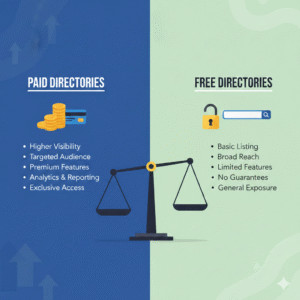
Paid vs. Free Directories
When you start submitting your site, you will see two options: free and paid.
- Free Directories: These are great for people on a budget. They allow you to list your site for $0. But they sometimes have less “power” or authority.
- Paid Directories: These must you to pay a fee. These sites charge a fee. They often offer better features. You get more visibility and stronger links.
In my professional experience, a mix of both is the best way to keep your profile strong and balanced.
Top Places to List Your Business
If you’re ready to start, here are some top free sites for your off-page SEO directory submissions:
- Google My Business: The most important one for showing up on maps.
- Bing Places: Like Google, but for the Bing search engine.
- Yelp: Essential for reviews and local discovery.
- LinkedIn: Great for professional and B2B businesses.
- Yellow Pages: A classic name that still carries weight.
- Better Business Bureau (BBB): Excellent for building trust.
- Manta & Hotfrog: Good for small business growth.
- Foursquare & Citysearch: Great for city-based discovery.
How to Choose the Right Directory
You should not join every directory you find. If you join a site that looks messy, “spammy,” or full of low-quality links, it can actually hurt your website. You want to “handpick” your directories.
Look for sites that have a professional design and are easy for people to use. You want to ensure that someone updates the content regularly. A big question many people ask is: How many backlinks per day should I get? The truth is, there is no magic number. One link from a good directory is much better. It beats getting 50 links from spammy sites in a single day. Slow and steady is the way to win this race.
Steps for a Perfect Submission
To make sure your submission works, follow these Steps
1. The Research Phase
Use tools like Moz or Ahrefs to see if a directory is “strong.” Look for a high Domain Authority (DA). If the site looks like someone made it in 1995 and hasn’t touched it since, stay away.
2. Prepare Your Info (NAP)
NAP stands for Name, Address, and Phone Number. This must be exactly the same everywhere. If you write “Street” on one site and “St.” on another, search engines might get confused. Be consistent.
3. Write a Good Description
Don’t copy and paste the same sentence 100 times. Write a clear, interesting description of what you do. Use keywords that people might type into a search bar, but don’t overdo it.
4. Choose the Right Category
If you are a baker, don’t list yourself under “Construction.” It sounds obvious, but many people make this mistake. Pick the most relevant section so that the right people find you.

Maintaining Your Listings
Many people believe that once they hit “Submit,” they have completed the job. This is a common mistake. Websites change, phone numbers change, and directories sometimes close down.
You should perform “periodic audits.” This means every few months, you go back and check your listings. Are they still accurate? Is the link still working? Using tools like Google Analytics helps you check if a directory sends you visitors. You should try to remove your link if a directory gets a bad reputation. Do this if it becomes “spammy” to keep your site safe.
Avoiding Common Mistakes
Here is what you should avoid:
- Ignoring Guidelines: Every directory has its own rules. If you ignore them, they will reject your site.
- Low-Quality Sites: Don’t be tempted by sites that look “cheap.” They can harm your authority.
- Forgetting to Follow Up: Sometimes you need to click a link in an email to verify your listing. If you forget, you waste your hard work.

A Holistic Way of Thinking
At the end of the day, off page seo directory submission is one part of a bigger picture. It is a “conduit” or a pipe that leads people to your high-quality content. Balance directory work with other tasks. Write great blog posts and stay active on social media.
Focus on quality, not quantity. Keep your information consistent. This way, you’ll create a “reservoir” of diverse links. A strong website foundation helps you stand out online. Keep it simple, keep it honest, and watch your rankings grow over time.
Frequently Asked Questions (FAQs)
Q1: What is off page SEO directory submission?
A1: It is the process of listing a website in online directories that categorize sites by niche, industry, or location to improve visibility and search engine rankings.
Q2: Why is directory submission important for SEO?
A2: Directory submissions help build authority, gain quality backlinks, improve local SEO, increase referral traffic, and enhance overall online presence.
Q3: Which directories should I submit my website to?
A3: Focus on high-authority general directories, niche-specific directories, and local business directories while avoiding spammy or irrelevant platforms.
Q4: How do I optimize my directory listings?
A4: Use consistent NAP (Name, Address, Phone Number) information, write clear and compelling descriptions, choose accurate categories, and include relevant keywords naturally.
Q5: How often should I audit my directory submissions?
A5: Conduct periodic audits to ensure listings are accurate, up-to-date, and free from duplicates, outdated information, or incorrect details that could harm SEO.
Q6: Can directory submissions affect local SEO?
A6: Yes, submitting to local directories like Google My Business, Yelp, and Yellow Pages improves local search visibility, foot traffic, and engagement with local customers.
Q7: What mistakes should I avoid in directory submission?
A7: Avoid spammy directories, low-quality links, duplicate content, inconsistent NAP, keyword stuffing, and neglecting to monitor listings regularly.