
Understanding What is Backlink? is one of the first steps in learning search engine optimization. A backlink is simply a link from one website that points to another website. When a webpage places a hyperlink that directs visitors to a different page, that link becomes a backlink for the destination site. In SEO, backlinks work like signals of trust and authority because they show search engines that another site considers your content useful. These links are sometimes called external links, outbound links, or outgoing links from the perspective of the linking page. From my early experience working with SEO projects, I noticed that even a single well-placed anchor text link on a strong page could bring noticeable traffic and improve search visibility.
Why Backlinks are the Currency of the Web
Search engines and AI systems rely on distinct signals to determine which sites provide the most value. Google utilizes its legendary PageRank algorithm to distribute link equity (or page authority) across domains. Think of these links as endorsements; the more high-quality connections you have, the higher your visibility on search engine results pages (SERPs). For instance, an industry leader like HubSpot dominates inbound marketing because their link quality and Page Authority carry massive weight.
Beyond traditional rankings, backlinks drive direct referral traffic. When a user is reading an article on a site like Harvard Health and clicks a link to your resource, you gain a targeted audience likely to convert. Furthermore, building these links creates pathways for automated crawlers, ensuring your content is recognized, indexed, and mapped across the digital ecosystem.
What Affects the Value of a Backlink?
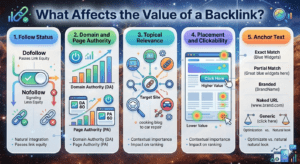
Not all links are created equal. Some can catapult you to the first page of Google, while others might have zero impact or even trigger a penalty. To build a strong profile, you must understand these five factors:
- Follow Status: Most links are “Dofollow,” meaning they pass ranking value. However, publishers may use a rel=”nofollow” attribute to tell Google not to use the link for ranking purposes. Other tags include rel=”sponsored” for paid ads and rel=”ugc” for user-generated content like forum comments.
- Domain and Page Authority: A link from the World Health Organization carries significantly more weight than one from a brand-new personal blog. Tools like Semrush’s Authority Score or Moz’s Domain Authority help estimate this “link power.”
- Topical Relevance: Context is king. A veterinary clinic gaining a link from a pet care blog is a massive win, whereas a link from a car dealership would lack relevance and offer less SEO value.
- Placement and Clickability: Google uses a “reasonable surfer model” to assess the likelihood of a link being clicked. Backlinks placed within the main body of the content are worth more than those buried in footers or sidebars.
- Anchor Text: This is the clickable text of the link. It should be descriptive and natural. Using keyword-stuffed phrases like “buy cheap shoes online” repeatedly is a red flag for link spam.
Different Types of Backlinks
As you grow, your link profile will become a mix of various sources. Editorial backlinks are the gold standard-these are naturally earned when a site like Sparktoro or Page One Power cites your work because it is valuable.
[Image showing the difference between editorial, guest post, and user-generated content links]
You might also pursue Guest Posts, where you contribute an article to a niche blog, or get listed in a Directory or resource page for local SEO. Be cautious with User-Generated Content (UGC) in blog comments or social media; while these are great for brand recognition and brand mention, they typically don’t pass ranking equity.
Domain Authority and Credibility
Another factor that determines the strength of a backlink is the authority of the linking domain. A link from a well-known website usually carries more value than a link from a small or unknown site. For example, a backlink from an organization such as the World Health Organization would usually have more impact than a link from a newly created blog. SEO professionals often estimate this strength using metrics like authority score, domain authority, or similar indicators provided by SEO tools.
Topical Relevance and User Engagement
Relevance also plays a big role in backlink value. Links from websites that publish related content are usually more powerful than links from unrelated sites. For instance, if a health website receives a backlink from another health-related source such as Healthline or a government health organization, search engines see that connection as more meaningful. Relevant backlinks often lead to better user engagement, higher referral traffic, and more conversions because the audience already has an interest in the topic.
Proven Strategies to Build Your Profile
If you are looking for Effective Content Marketing Tips for Small Websites, the best approach is to create “linkable assets.” This means producing original research, surveys, infographics, or in-depth “how-to” guides that others naturally want to cite.
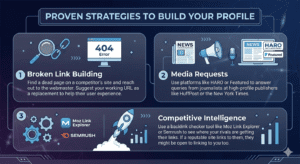
- Broken Link Building: Find a dead page on a competitor’s site and reach out to the webmaster. Suggest your working URL as a replacement to help their user experience.
- Media Requests: Use platforms like HARO (Help a Reporter Out) or Featured to answer queries from journalists at high-profile publishers like HuffPost or the New York Times.
- Competitive Intelligence: Use a backlink checker tool like Moz Link Explorer or Semrush to see where your rivals are getting their links. If a reputable site links to them, they might be open to linking to you too.
Click Probability and Link Placement
Link placement influences how search engines evaluate backlinks. Links placed inside the main content of an article usually receive more attention than links placed in footers or sidebars. According to the reasonable surfer model, links that are more likely to be clicked may pass more value. When a link appears in a visible part of the content, it has a higher chance of generating user clicks and referral traffic.
The Role of Anchor Text
Anchor text is the clickable text used in a hyperlink. It helps search engines understand what the linked page is about. Using descriptive and natural anchor text is important for SEO because it provides context to both search engines and users. However, overusing keyword-rich anchor text can look unnatural and increase the risk of penalties. A balanced mix of branded, generic, and descriptive anchor text creates a natural backlink profile.
Risky Link Schemes
While backlinks are powerful for SEO, some link building methods can be risky. Practices such as buying links, exchanging links excessively, submitting sites to low-quality directories, or generating automated links can lead to spammy backlinks. Search engines often detect these patterns and may ignore those links or apply penalties. Many SEO professionals use backlink audit tools to identify toxic backlinks and remove or disavow them using Google Search Console.
Practical Link Building Approaches
Because of these risks, modern SEO focuses on ethical link building strategies. One effective method is creating high-quality content that people naturally want to reference. Articles, research studies, guides, infographics, case studies, and helpful tutorials often attract natural backlinks from publishers and bloggers. This approach builds credibility and long-term authority while improving referral traffic and brand recognition.
Another strategy is broken link building. This method involves finding broken links on other websites and suggesting a replacement resource from your own content. Website owners often appreciate this because it helps them fix outdated pages and improve user experience. Outreach emails that politely suggest a helpful replacement resource can often lead to new backlinks.
Media and Competitor Backlink Opportunities
Backlinks can also be earned through media mentions and competitor analysis. Journalists often request expert insights for their articles, and providing helpful responses can result in backlinks from news websites. Platforms such as HARO, Qwoted, and Featured connect journalists with experts who can provide insights.
Another method is competitor backlink analysis. By studying the backlink profiles of competing websites using SEO tools, marketers can discover new link opportunities. If a website links to your competitor’s content, there is often a possibility that it may also link to your content if it provides useful information.
FAQs
- What is backlink in SEO?
A backlink is a link from one website to another. It helps search engines understand the credibility, authority, and relevance of a webpage. - Why are backlinks important for SEO?
Backlinks act as trust signals for search engines. When reputable websites link to your content, it can improve rankings and increase organic traffic. - What is the difference between dofollow and nofollow backlinks?
Dofollow backlinks pass link authority and can help improve search rankings, while nofollow backlinks usually do not pass ranking value but can still bring traffic. - How can I get high-quality backlinks?
You can earn backlinks by creating valuable content, guest posting, building relationships with other websites, and using strategies like broken link building. - Can bad backlinks harm SEO?
Yes. Spammy or low-quality backlinks can negatively affect rankings. It is important to monitor backlinks and remove or disavow harmful links.